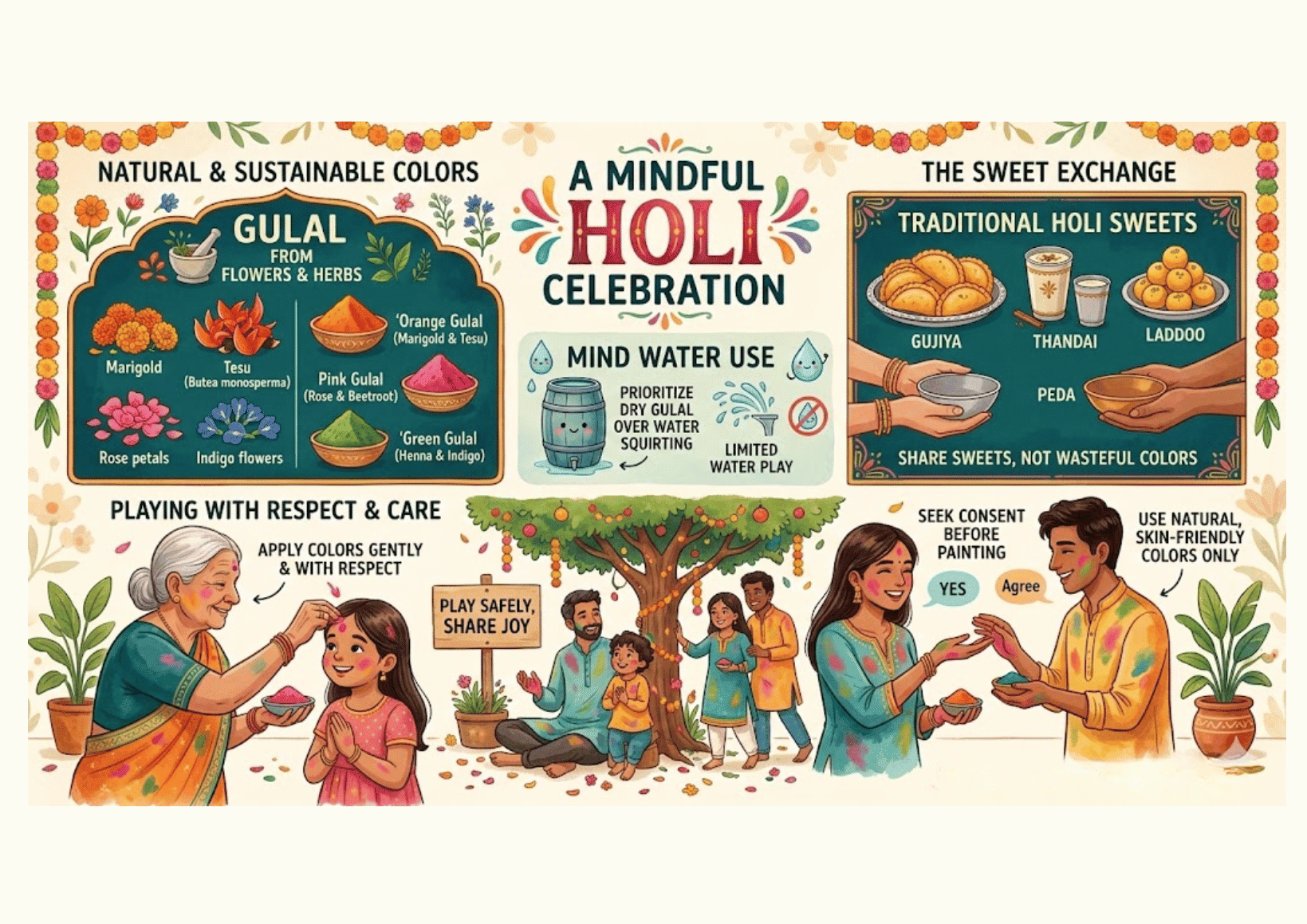
The smell of gulal in the air. The color in your hair. The laughter from the street. The feeling of not caring how you look. Buckets of water. Music too loud. Faces are unrecognizable and happy.
But stop for a second. Compare Holi from your childhood to Holi today. The scale is bigger. The waste is bigger. The chemicals are stronger. And the water use? Out of control.
You can celebrate fully. You just need to celebrate smarter.
The Water Crisis We Pretend Doesn’t Exist
You’ve seen it.
Water tankers lined up in colonies. Dry taps in April. Borewells are going deeper every year. According to NITI Aayog, nearly 600 million Indians face high to extreme water stress. And even when water does show up, it isn’t always safe to drink. People are falling sick from something as basic as a glass of water.
Climate change makes it worse. Summers arrive earlier. Monsoons shift. Snowfall in the Himalayan regions comes late, which delays meltwater that feeds rivers and reservoirs.
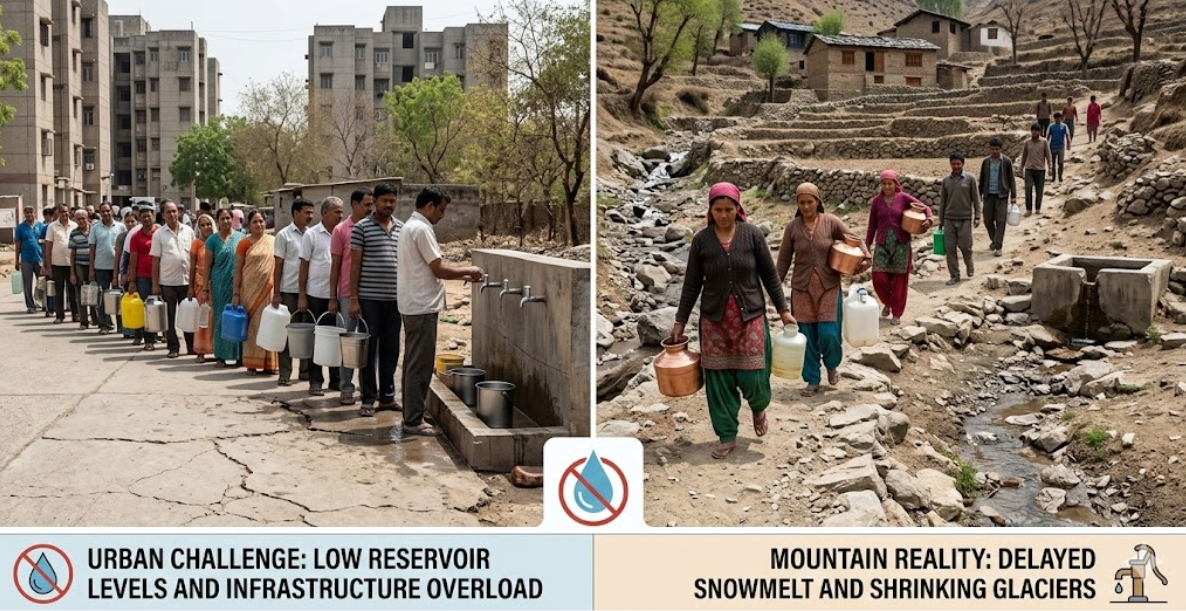
In hill states, delayed snowfall is not an inconvenience. It’s a survival risk.
And in the plains?
We fill thousands of water balloons.
A Bucket vs. A Hose
One bucket is a celebration. A running hose for three hours is a waste. If your area already faces shortages, choose dry Holi. You won’t lose the fun. You’ll gain responsibility.
The Hidden Chemicals in Your Colors
Those neon pinks and electric greens look festive. But many cheap powders contain industrial dyes mixed with heavy metals like lead, chromium, and mercury.
They don’t disappear after you wash them off.
They enter the soil. Drains. Rivers. Hospitals report spikes in skin rashes, eye irritation, and respiratory problems right after Holi every year. And then there’s the packaging. Thin plastic pouches. Single-use wrappers. Most of it is non-recyclable.
It stays long after the colors fade.
Holika Dahan: When Symbolism Turns Wasteful
Holika Dahan represents the victory of good over evil. It’s powerful. It’s cultural. It’s meaningful.
But look at what we burn today. Large quantities of wood. Sometimes, freshly cut trees. Often mixed with plastic waste, tyres, or synthetic materials. When plastic burns, it releases toxic fumes like dioxins. These harm the lungs and instantly pollute the air.
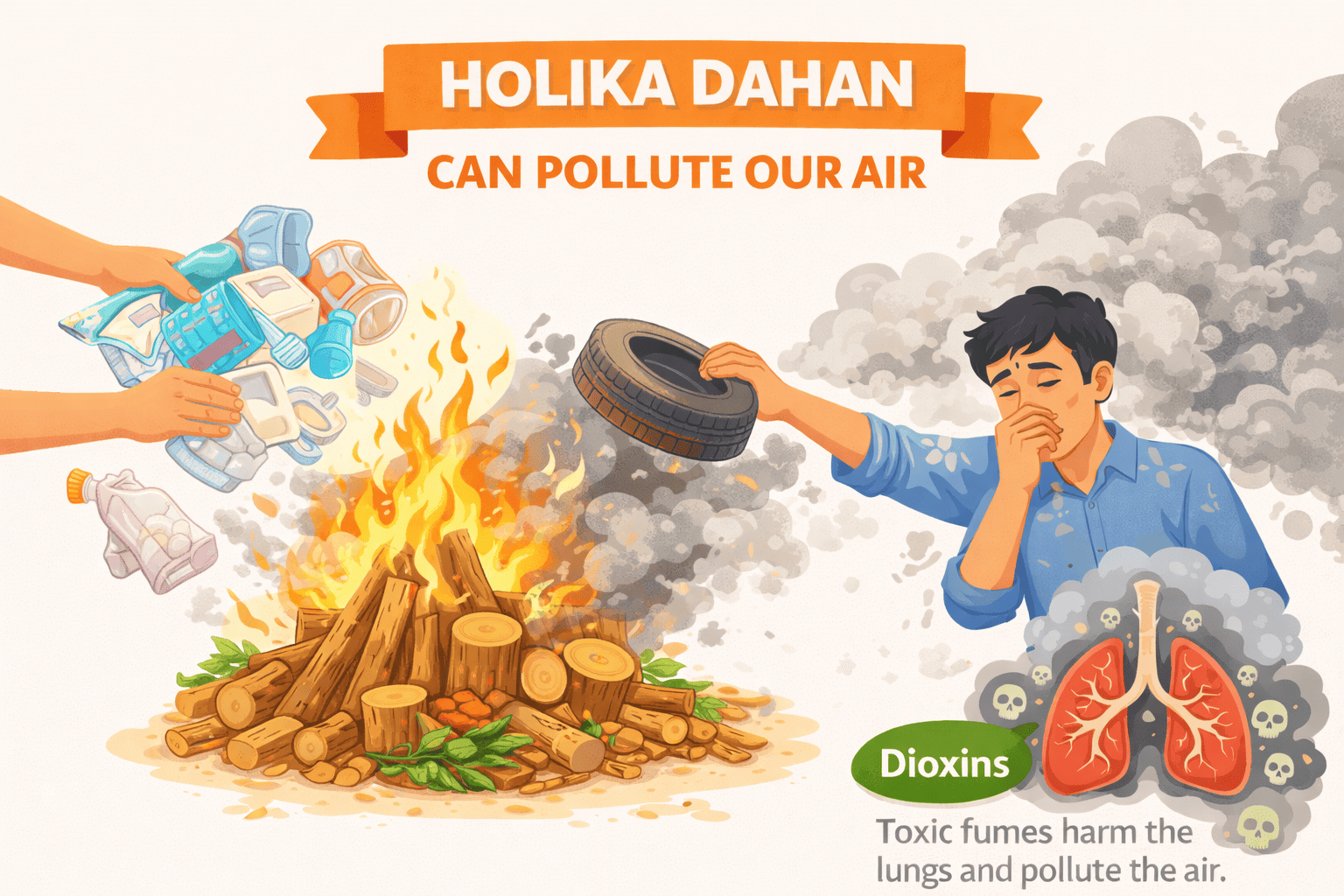
A symbolic community bonfire is enough. A massive smoke cloud is not devotion. It’s pollution.
Encourage your community to:
- Use dry agricultural waste instead of cutting trees
- Avoid plastic and synthetic materials completely
- Keep the bonfire meaningful, not massive
The Plastic Aftermath
The morning after Holi tells the real story.
Burst balloons everywhere. Broken plastic pichkaris. Empty color packets are scattered across the streets.
Municipal workers face one of their toughest cleanup days of the year. Most small plastic toys and packaging used during Holi are low-grade plastic. They are rarely recycled. They go straight to the landfill. Or worse, they clog drains and enter water bodies.
Holi adds to that spike.
But you can reduce it easily.
Make Natural Colors at Home
Stop buying synthetic gulaal. Make your own.
Yellow (Turmeric): Mix 2 tbsp turmeric + 2 tbsp gram flour. Done.
Red (Beetroot): Dry beetroot slices for 2-3 days. Grind to powder. Mix with cornstarch.
Pink (Rose): Dry rose petals (from temples). Grind with rice flour.
Green (Henna): Dry henna leaves. Powder them. Mix with cornstarch.
Orange (Palash/Tesu): Dry traditional orange flowers. Grind. Mix with a flour base.
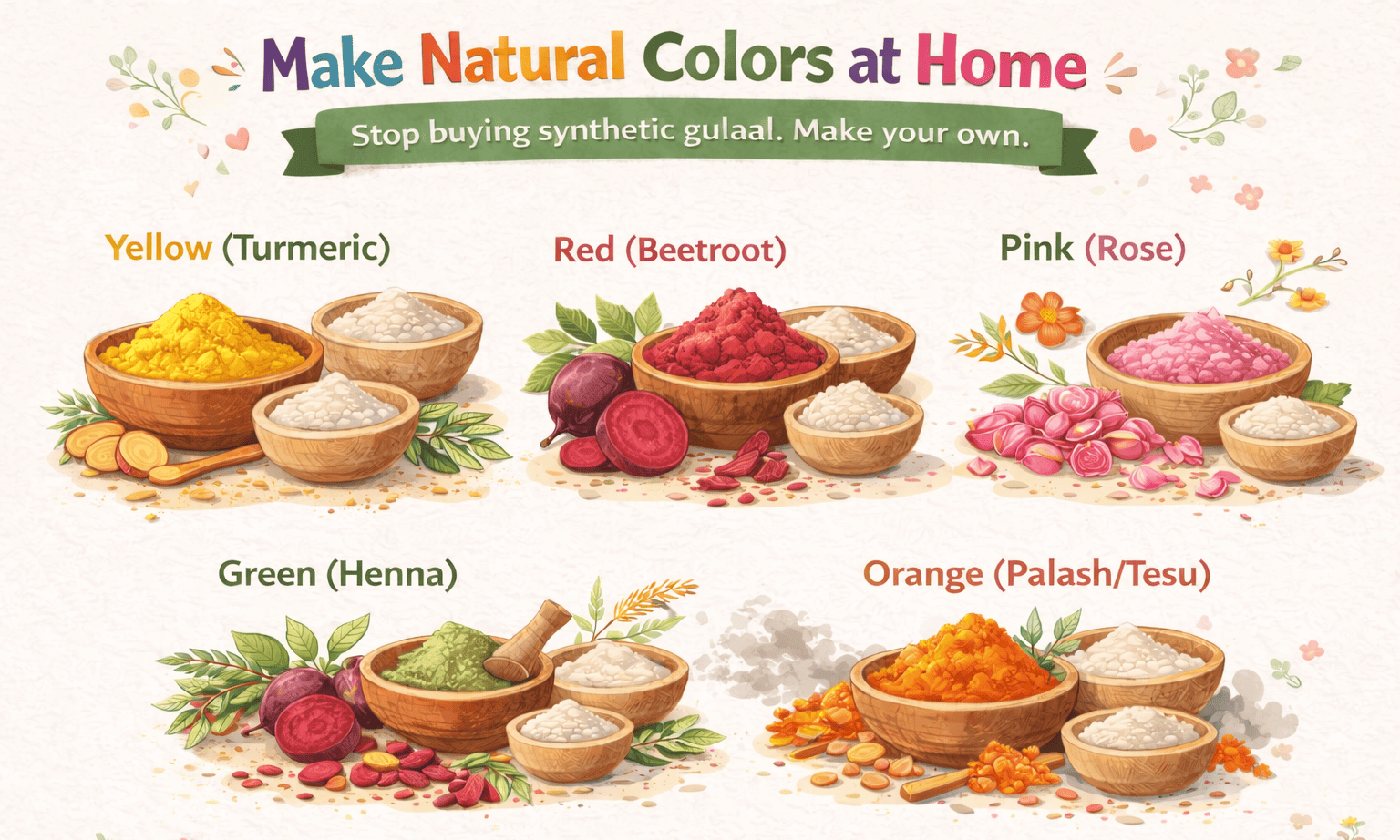
They’re softer than synthetic colors. They fade faster.
Buy From These Certified Brands
Some of the brands are:
- Temple flower waste
- Ecocert and IIRT certified
- Starting from ₹120
- Orchids, roses, turmeric base
- ₹690 for a pack of 6
- Non-allergic claim
- Recycled temple flowers
- IIRT certified
- Starting from ₹70
- Taste-safe formula
- Lab-tested
- Good for kids
- Starting from ₹399
- NABL Lab tested
- 100% Natural
- ₹399 for a pack of 6
- Empowers Farmers
- Has a recycling option
- Starting from ₹145
The Shift Is Already Happening
A few simple and meaningful changes can make a difference.
Set a limit on the water you use. If your area is already short of water, think about not using water for Holi this year.
Do not use water balloons at all. They are fun for a second, but then they leave behind plastic that cannot be recycled.
Buy things from local sellers and buy them early. Local sellers who sell colors often do not sell as much as big companies that sell synthetic colors. When you buy from sellers, you are helping to make the supply chain better.
Keep your Holi clothes instead of throwing them away after one use. It is an idea to use old clothes for Holi every year. This helps to reduce waste from clothes.
Talk to your friends about these things. When we talk about these things, it can help to change people’s habits. You might be the one who helps someone change their habits this year.
You don’t need to make Holi smaller.
You need to make it better.
More intentional. More connected. More aligned with what it celebrates: renewal, spring, life.
Mother Nature already gave you every color you need.
Celebrate her with respect.
Happy Holi. Play beautifully.

Leave a Reply