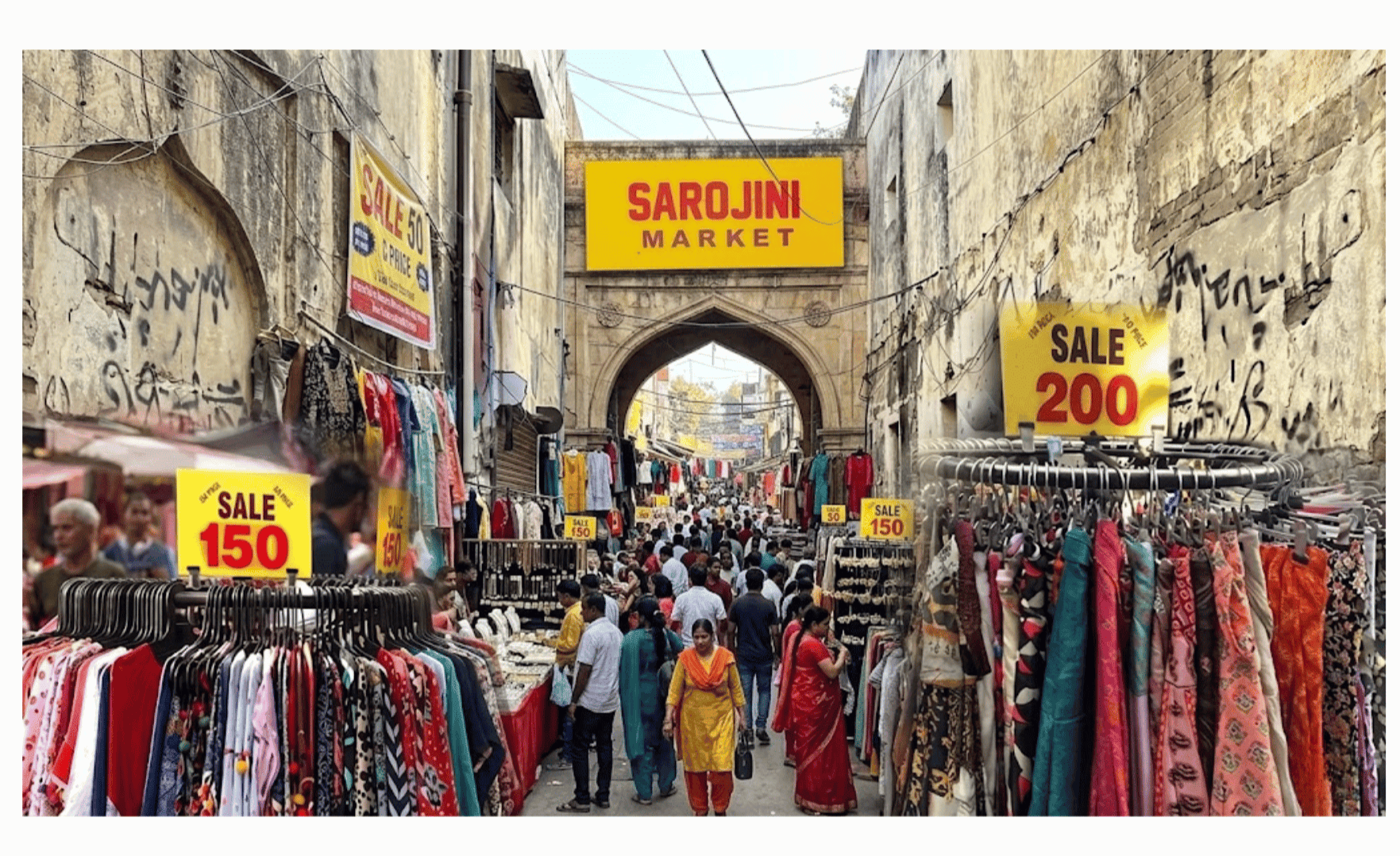
Saturday or Sunday, that is when we decide to go out and shop. Sarojini Nagar is packed every single day. Not just weekends. Like, there’s a permanent sale that never ends. Clothes, home decor, accessories, everything is available at prices already low enough to make you stop and look. And if the price still feels like too much, we bargain it down further.
We walk away feeling like we won something. A small sense of victory, a quiet pride in having paid the least possible.
But is it really a victory?
There is an old saying that says when something costs almost nothing, somebody somewhere is quietly paying the rest of the price.
In India, we are taught to be the masters of the bargain. We pride ourselves on getting the lowest price. However, our obsession with “cheap” is creating a “race to the bottom” that is destroying our environment, our labor force, and, surprisingly, our own bank accounts.
1. The Math of “Cost-Per-Wear”: Why ₹1500 is Cheaper than ₹400
Take two plain cotton t-shirts.
One costs ₹400, the other ₹1,500.
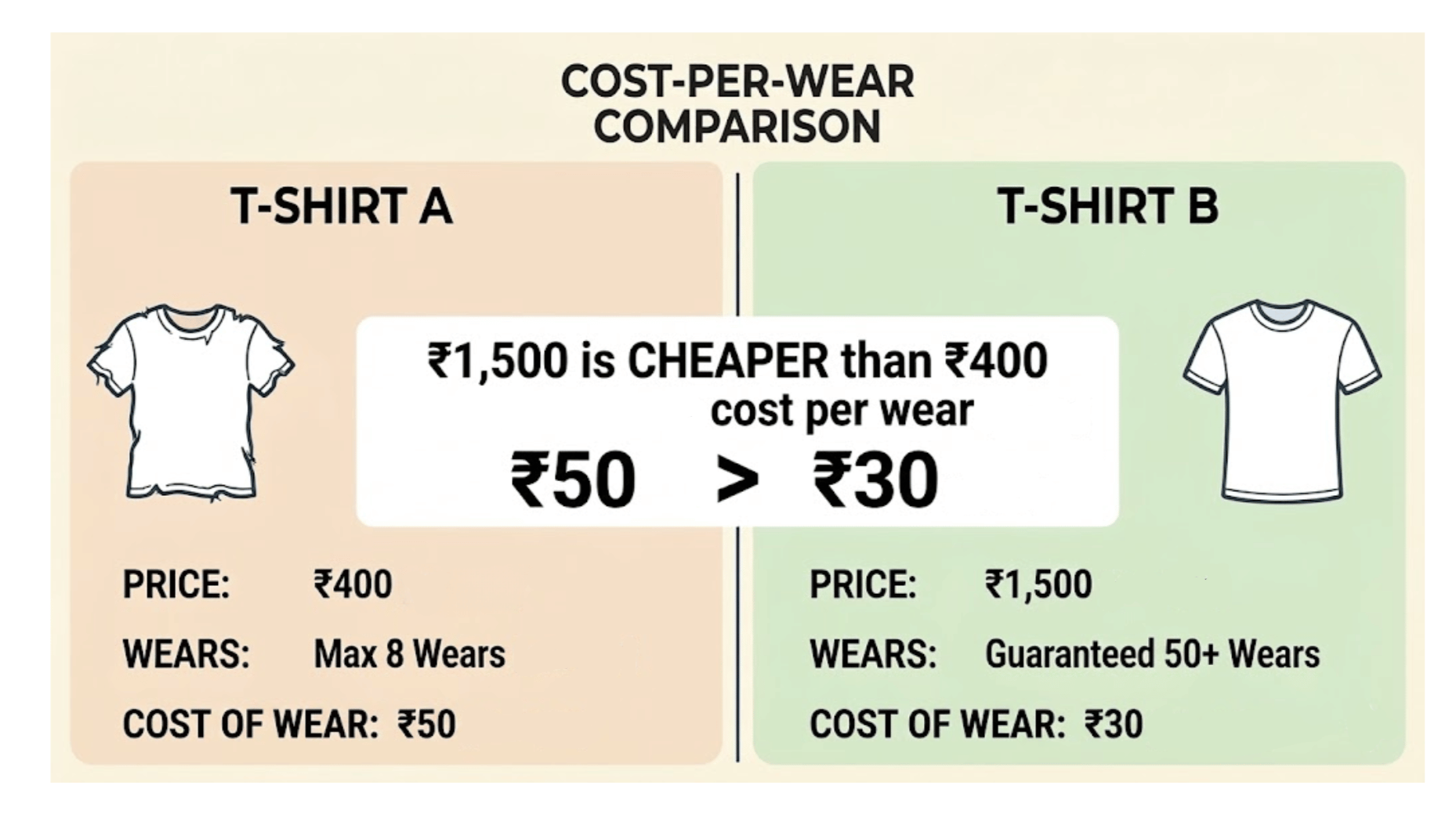
The cheaper one shrinks after a few washes, the seams loosen, and the color goes dull. You get maybe 8 wears out of it, ₹50 per wear.
The pricier one, made with better cotton and actual stitching, lasts through 50 wears easily, at ₹30 per wear.
Over time, the “expensive” sustainable shirt is actually 40% cheaper than the fast fashion one. When we buy clothes, we’re not saving money; we’re just buying more and more.
2. The Sarojini Effect: Psychology of the “Dump.”
India has become a dumping ground for global fast-fashion surplus. Markets like Sarojini Nagar are no longer just about local thrift; they are visual evidence of overproduction. Because prices are so low, our psychology shifts.
We stop buying based on need and start buying based on impulse. Brands use “exploitative trends”, releasing new “drops” every week to make you feel that what you bought last month is already obsolete. The word “Fast” doesn’t just refer to the speed of the sewing machine; it refers to how quickly a brand wants that garment to throw them away.
3. The Hidden Human Cost: Would You Work for ₹300?
We live in an India that dreams of progress.
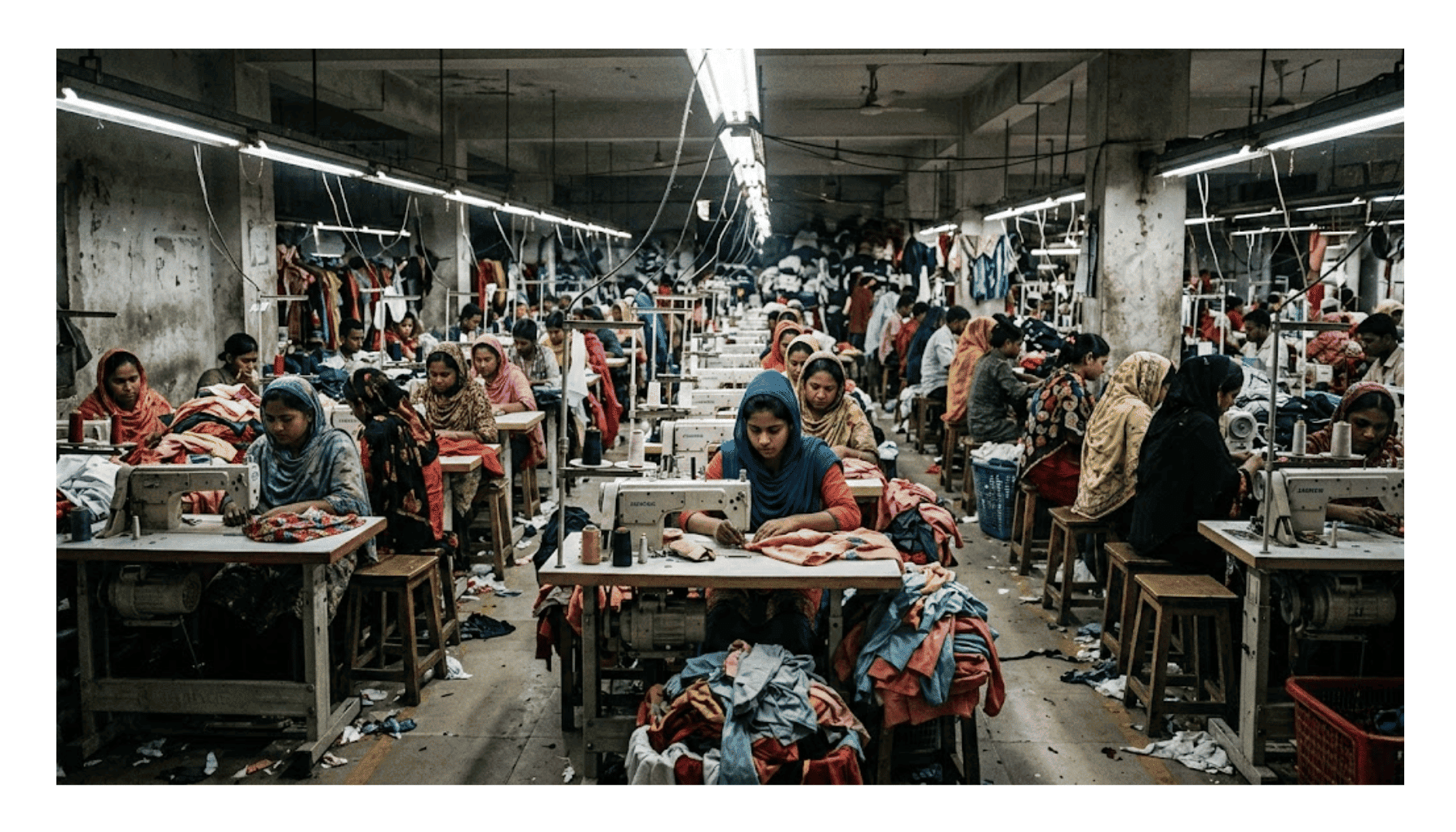
We want five-day work weeks, hybrid offices, health insurance, PF contributions, and 30 days of paid leave. These are fair things to want. While we fight for “work-life balance,” someone worked 15 hours for ₹300 in the textile industry
Without weekends, without insurance, without much of a safety net. Sometimes entire families get pulled into the work just to keep pace with demand. Not because their time is worth less, but because the system we keep feeding with our purchases has decided it is.
Unequal wages aren’t some distant issue tied to factories we’ll never see. They’re much closer than that. Just look around.
The dhobi who brings back your clothes neatly pressed. The cobbler outside the market has spent years repairing shoes. The tailor who fixes, alters, and makes things fit just right. The bai who quietly keeps your home running so your day can run smoothly.
These are people whose work we rely on almost every day. Yet their wages are often the first thing we bargain over.
This isn’t about guilt. It’s about awareness. The same things we want in our own jobs, fair pay, dignity, and respect for our work, belong to them too.
You realize this the moment you step outside India. Abroad, a simple alteration is a luxury. A handmade piece costs a small fortune. A cobbler, if you can find one, charges what the skill is actually worth. And you stand there thinking, we have all of this back home. In every lane, in every market, in every small town. We are genuinely blessed with talent that most of the world would pay handsomely for.
So the least we can do is pay fairly. Not out of guilt, but out of gratitude. Because these hands are keeping something alive that deserves to survive. And if we keep asking them to do it for less and less, one day we will look around and find that the skill, and the person behind it, has quietly disappeared.
Nothing on that receipt will tell you any of this. But now you know.
What cheap fabric is actually made of
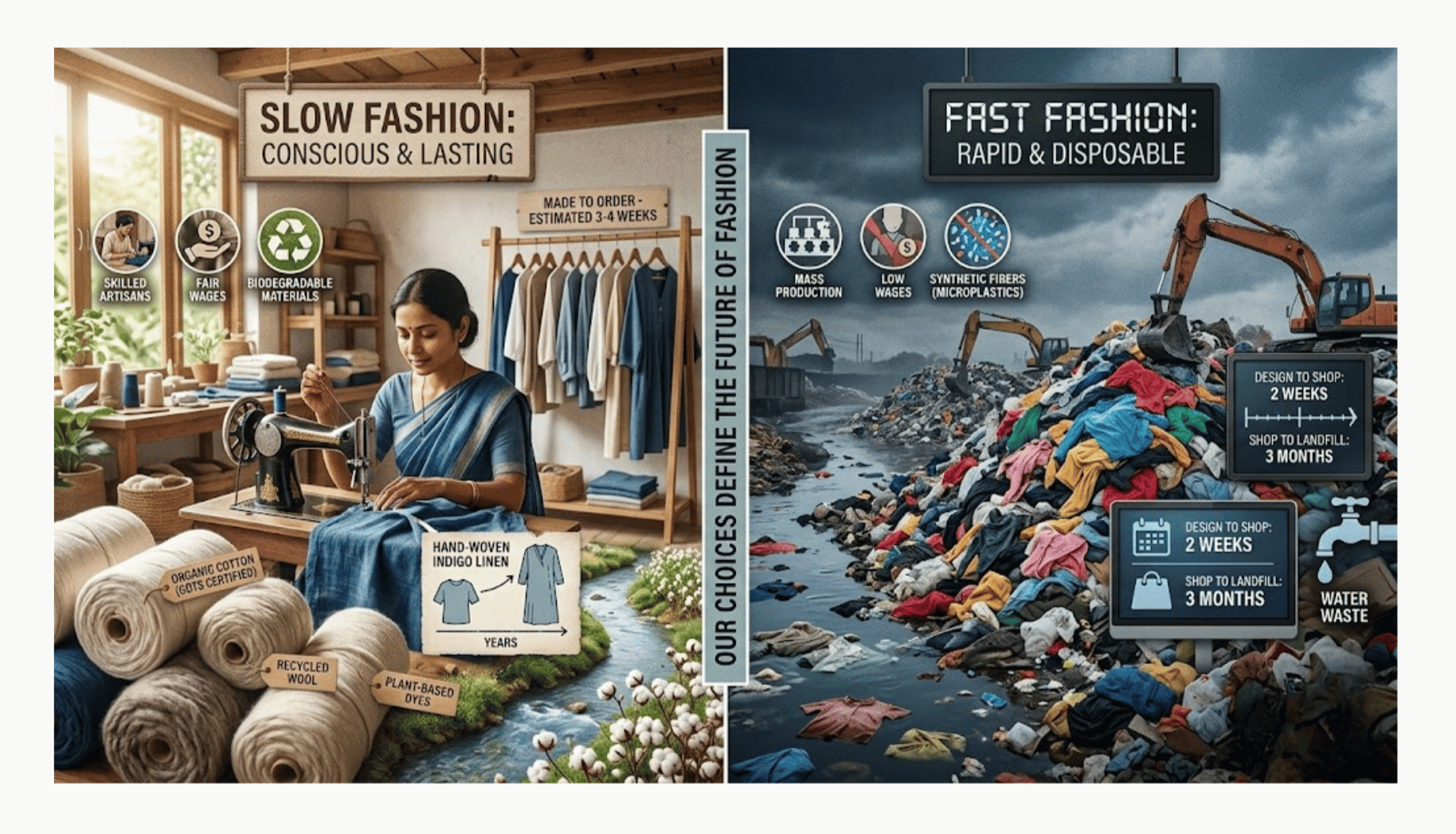
To keep prices low, fast fashion cuts corners on material, on dye, on stitching.
Synthetic blends that trap heat in an Indian summer.
Seam that give out after a handful of washes.
Dyes (often toxic) that workers handle daily, breathing in what eventually shows up as chronic illness.
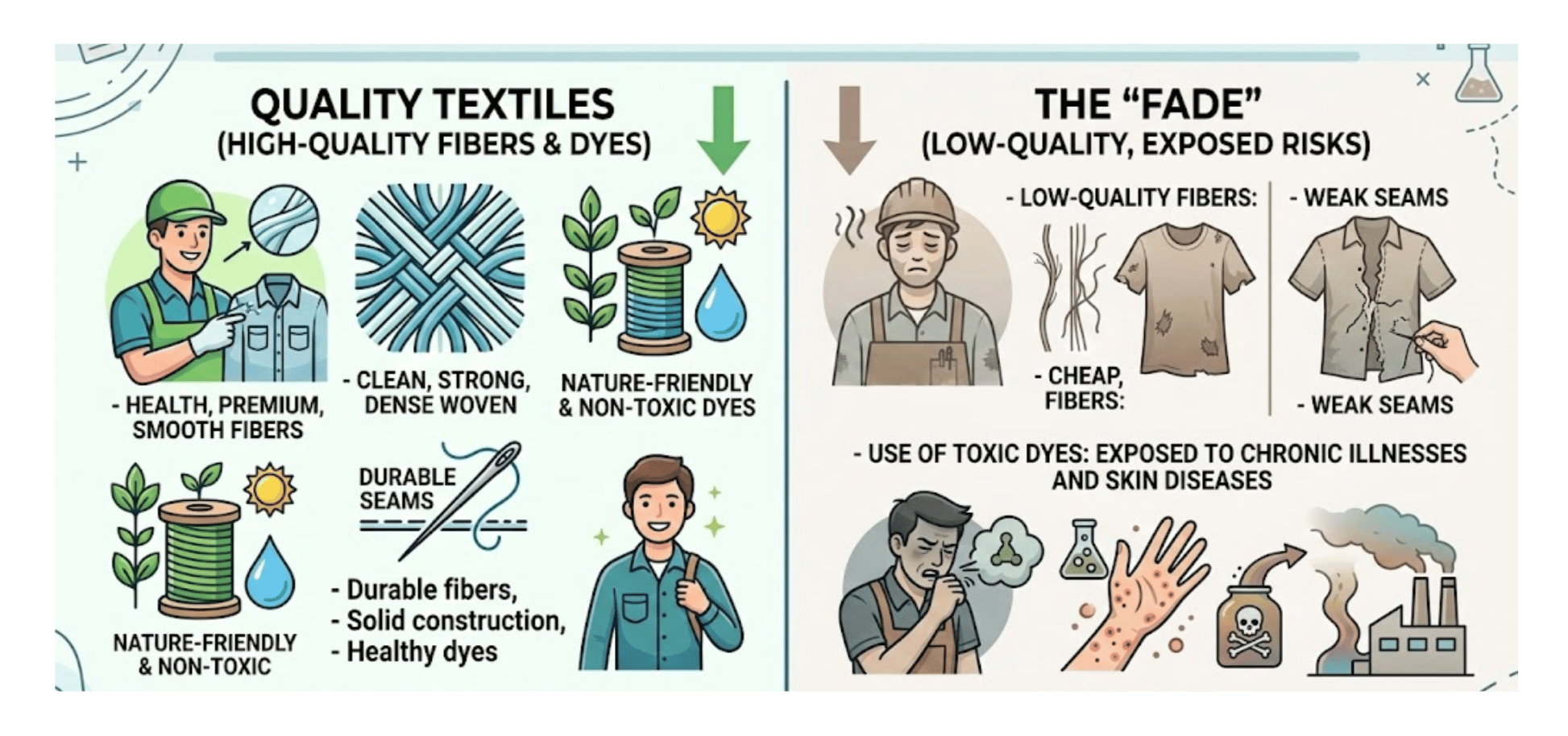
When you pay more for a slow fashion piece, some of that money goes to the farmer who grew organic cotton, the person who used safer dyes, and the tailor who took time on the stitching because the garment was meant to last.
And every time a cheap synthetic shirt gets washed, thousands of microfibers enter the water. Rivers, groundwater, eventually the sea. It adds up quietly, the way most permanent damage does.
If you want to go deeper into how far the damage travels, from the cotton farm to your wardrobe, I have covered the full impact of the cloth value chain in a previous article. Worth a read.
What the price tag isn’t telling you
Real value was never just the number at the billing counter. It is how long something serves you, and what it took from the world to get made. The next time something is priced at ₹299, the honest question to sit with is who paid the rest?
Buy less. Buy better. Local. And pay the full price, not just the one that shows up on the tag.

Leave a Reply