Tag: carbon emissions

  • The Truth Behind Clothing Labels: Explaining EPD in Fashion

    The Truth Behind Clothing Labels: Explaining EPD in Fashion

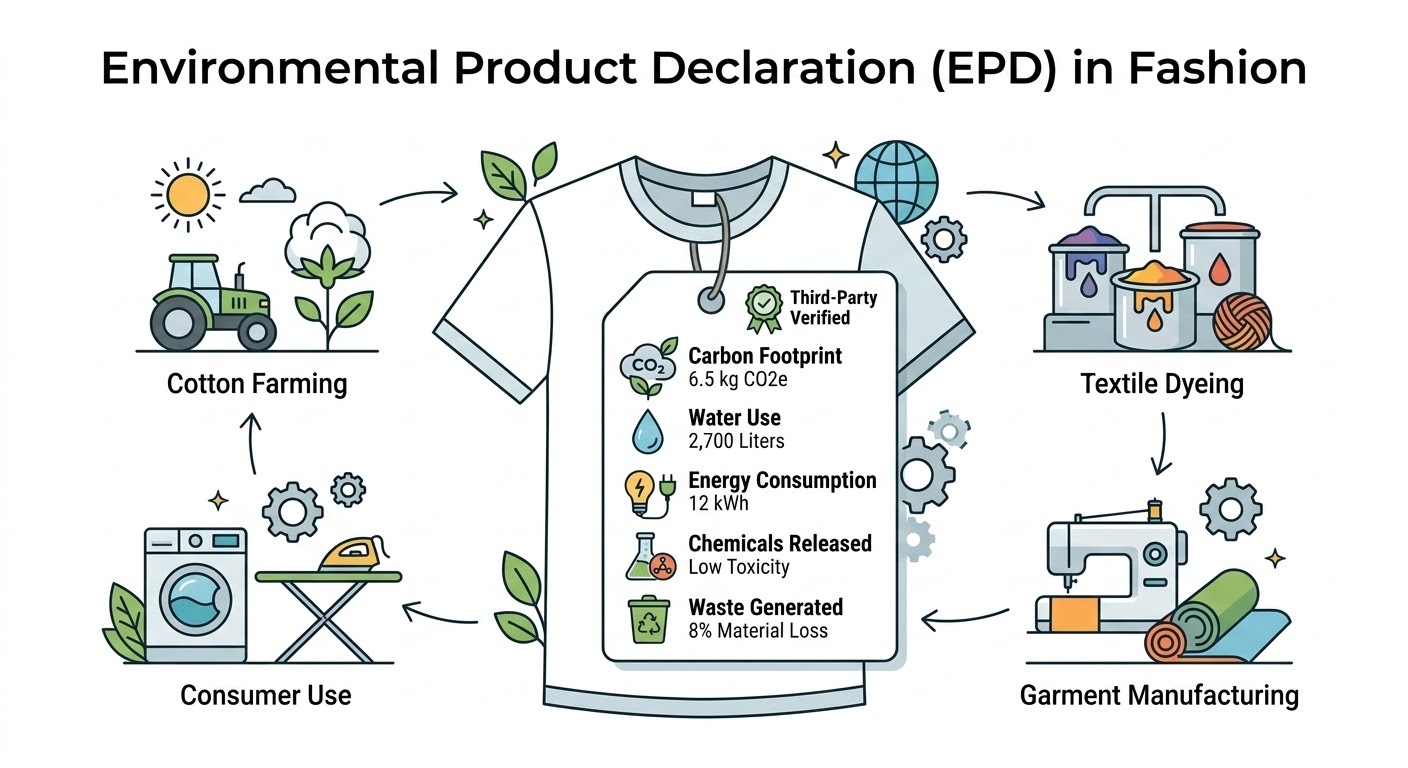
    Usually, you might spot-check the nutrition facts before buying cereal. Perhaps you may refer to the ‘energy’ ratings before purchasing a refrigerator. An EPD (Environmental Product Declaration) is quite a bit like a nutrition label for an item of clothing, although rather than calories and sugar, it highlights the health of the planet.

    What Is an EPD?

    An Environmental Product Declaration (EPD) tells you in detail how much water was consumed, how much CO2 was emitted, and which chemicals were used when producing that particular shirt or pair of shoes.

    Fashion brands were, for a long time, able to claim that they were “green” without any evidence. Nowadays, these report cards are based on solid data that has been verified by third parties, so it is not possible to cover up “dirty” supply chains.

    A single EPD rests upon a Life Cycle Assessment. This method measures inputs and outputs across all phases. Resources are pulled in waste released, and each step gets counted. From start to finish, nothing stays hidden. Each phase reports what it takes, what it leaves behind.

    Why This Matters?

    The Hidden Cost of Fast Fashion

    The fashion industry is behind:

    • 10% of global carbon emissions (more than aviation and shipping combined)
    • 20% of global wastewater (a single cotton t-shirt = 2, 700 liters of water)
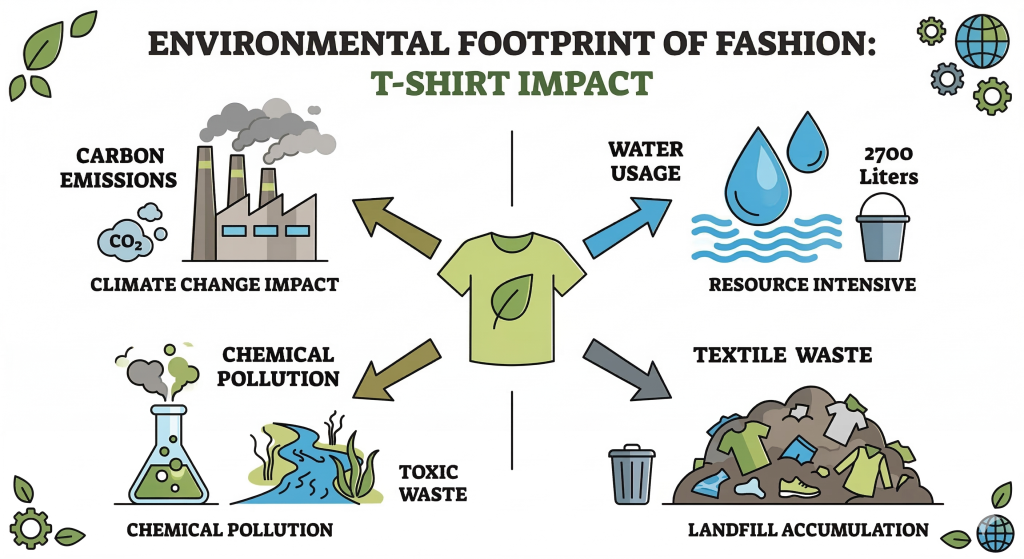
    environmental footprint of fashion, representing carbon emissions, water usage, chemical pollution, and textile waste.

    When you don’t know what the environmental impact of your clothes is, you can’t choose wisely. EPDs are a step in the right direction.

    Greenwashing Ends, Real Transparency Begins

    We have all noticed those labels: “Made with sustainable materials” or “Eco-conscious collection. However, what do they actually signify? In many cases, nothing significant. 

    EPD documents play a significant role in eliminating marketing exaggeration and reveal the following data:

    • Standardized measurements you can compare across brands
    • Verified data from the entire production lifecycle
    • Clear numbers instead of vague promises

    Below are four areas where EPD is making a difference in the fashion industry:

    1. Motivating Companies to Take Environmental Steps

    Once environmental footprints become transparent, apparel makers will start taking steps to minimize them. Nobody would want to have a very low score in terms of disclosure of information. 

    2. Encouraging the Development of New Products

    Businesses are orienting their operations towards more sustainable methods for dyes, energy, water, and materials usage because EPDs enable them to both measure and advertise enhancements.  Businesses can fairly compare two similar items, like two different cotton T-shirts, to see which has a lower footprint.

    3. Abiding by Rules and Standards.

    In fact, disclosing one’s environmental performance is turning into a requirement in a large part of the world, including the EU. Apart from making sure that brands comply with these regulations, EPDs can be a powerful tool for gaining trust and authenticity in the eyes of consumers.

    Real-World Impact

    Picture yourself browsing online, then spotting a side-by-side like this

    Brand A – Jeans emit 30 kg CO2 = Use 3,500 Liters of water = Use 40kWh energy
    Brand B – Jeans emit 15 kg CO2 = Use 1,600 liters of water = Use 20 kWh energy
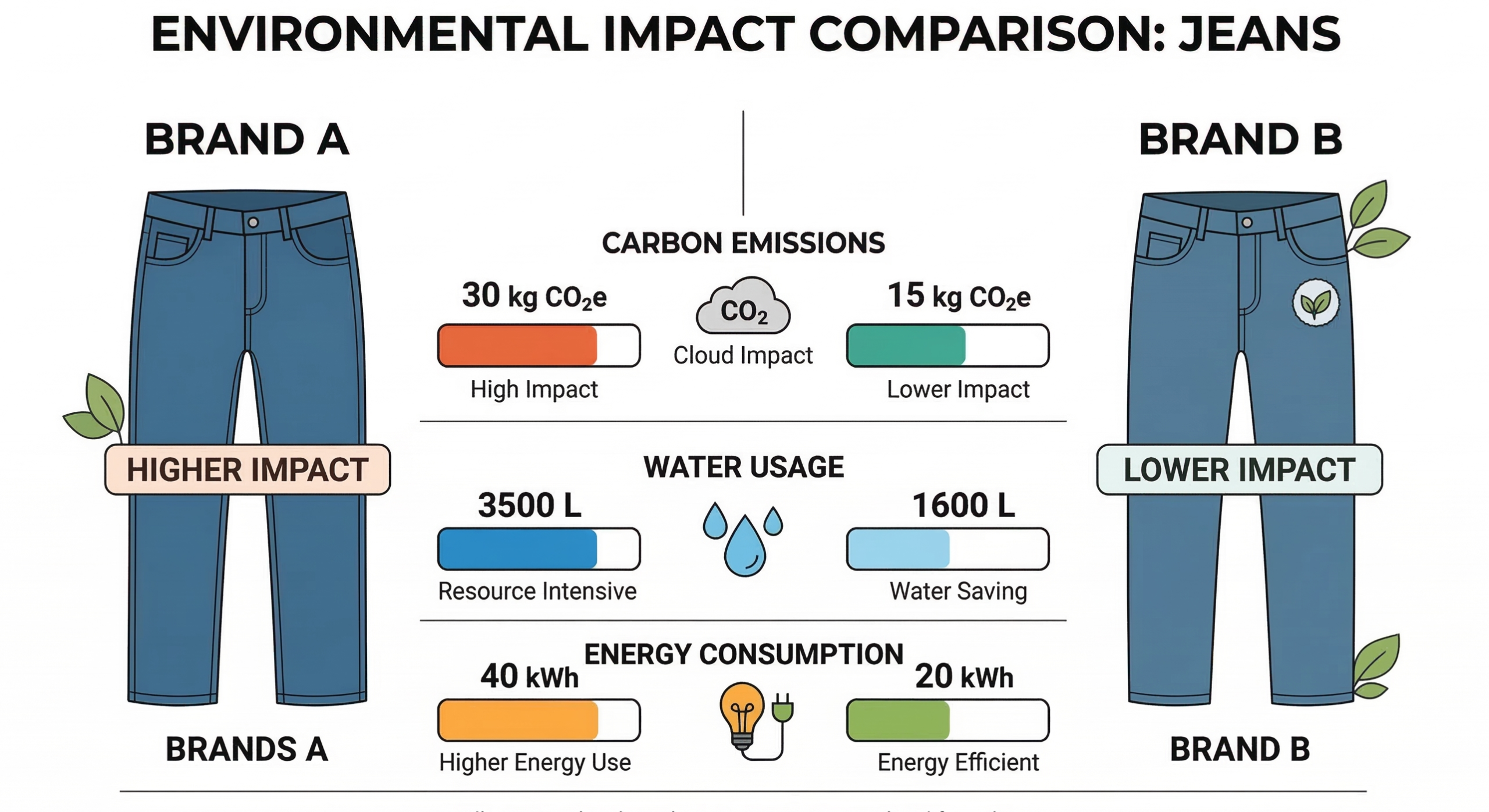
    comparison of two clothing products showing environmental data. Two jeans displayed side by side with environmental metrics

    Somewhere in the quiet, green steps become real – yours to take today.

    A few clever companies have started sharing their progress through EPDs. These updates reveal real changes they’ve made over time. Not every brand does this yet, but it’s becoming more common. What stands out is how openly they present the details. Slowly, others may follow simply by seeing what’s possible

    The Bottom Line

    EPDs are not the solution to all environmental problems; they are complicated, expensive, and not very well-known in terms of fashion yet. But they symbolize one very important thing: responsibility.

    EPDs are a sort of reality check in an industry that is mostly led by trends and looks.

    Besides style, there is always a hidden story of water energy, chemicals, and carbon behind each piece of clothing.

    In fact, you might simply decide not to buy anything or to buy the least harmful alternative after getting enough information.

    Fashion can be green, but first, we have to realize the actual price. This is why EPD is a solution.
  • The True Cost of a Cotton T-Shirt: Environmental Impact & What You’re Really Paying For

    The True Cost of a Cotton T-Shirt: Environmental Impact & What You’re Really Paying For

    You’re probably wearing a cotton T-shirt right now.
    Maybe it feels soft because you’ve washed it many times. Maybe it’s new and still has a hint of factory smell. Perhaps it’s the shirt you wear to the gym or for sleeping. 

    But have you ever thought about what it takes to create that simple item of clothing?

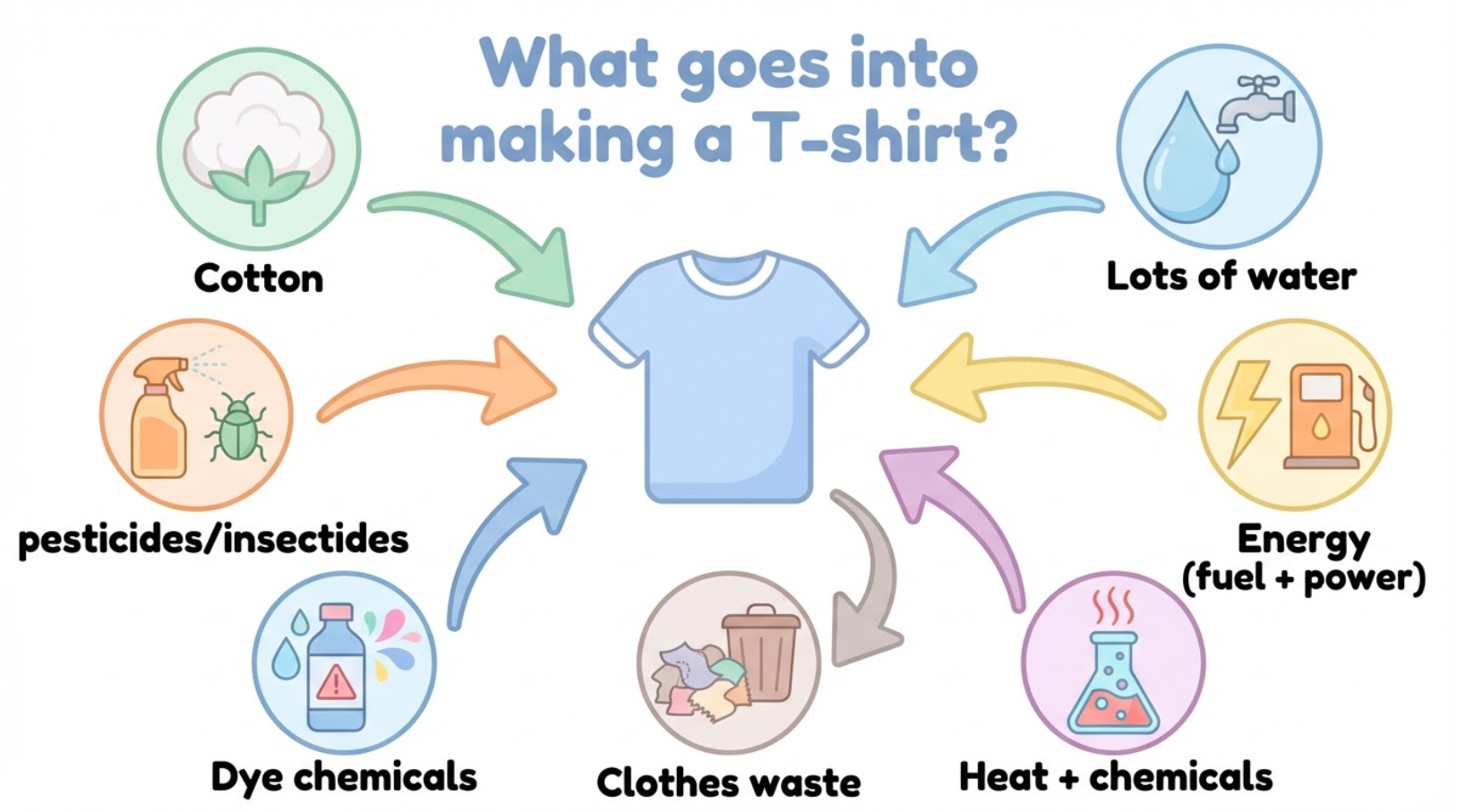
    Behind that soft fabric is a story most of us never see. Producing a single cotton T-shirt requires about 2,700 liters of water. This simple piece of clothing has made textiles one of the most polluting industries in the world.

    Let’s look at the life cycle of a cotton T-shirt, from the cotton field all the way to the landfill, and see what happens at each stage.

    1. It Starts in the Field: Cotton Farming

    Let’s begin at the start: the field.

    Cotton is a very thirsty crop. In India, most cotton farms depend on monsoon rains. Climate change has made these rainfall patterns unpredictable. When the rains don’t come, farmers rely on groundwater to save their crops. It drains aquifers that whole communities depend on for drinking water. In severe cases, it can make drought conditions worse.

    Cotton is highly vulnerable to pests, especially cotton bollworms. Farmers rely on synthetic pesticides and chemical fertilizers to protect their plants.

    Flowchart showing environmental impact of cotton farming and water shortage.

    Organic cotton farming avoids syntahetic pesticides completely, yet conventional cotton still dominates the global market.

    And at this point, the T-shirt is still on the farm.

    2. Turning Cotton Into Fabric: Energy-Intensive Manufacturing

    After harvesting, cotton moves to factories.

    The fibers are separated from seeds through ginning.

    They are spun into yarn and then woven or knitted into fabric. After that, the fabric goes through chemical treatments and heat processes to become softer, smoother, and whiter. 

    Carbon emissions from manufacturing of a cotton t-shirt.  
process of making yarn from fabric

    Each of these steps uses energy.

    Textile manufacturing produces 2 billion tons of carbon dioxide emissions each year, making it a major contributor to pollution.

    3. The Most Toxic Stage: Dyeing and Finishing

    This is when your T-shirt gains its color, softness, and the “won’t shrink” label. It’s also the stage where the environmental impact increases.

    Textile dyeing uses a lot of water and relies heavily on chemicals. 

    Environmental impact from textile dyeing
fast fashion pollution

    Untreated waste water flows directly into rivers and lakes. This causes oxygen loss in water, making fish suffocate. Bright dyes block sunlight, killing aquatic plants and harming ecosystems. Toxic chemicals accumulate in the food chain.

    After dyeing, the fabric is cut and sewn to make the T-shirt you buy. 

    Garment manufacturing often comes with a heavy human cost. Many workers face tough conditions, long hours, and low pay. These issues show the real price behind the clothes we wear every day. 

    If a T-shirt has a crooked seam or small color difference, it might get rejected and get into landfill or incinerated. All the water, energy, chemicals, and labor put into it are wasted. 

    Some rejected shirts are sold cheaply in bulk, but many more end up incinerated or in landfills. Every T-shirt you wear comes from someone’s labor. That’s worth considering.

    4. Transportation and Sales

    Most T-shirts are made in developing countries and sold in wealthy nations. This means they cover long distances before arriving at a store or your home. Packaging, shipping, freight, warehousing, and distribution all increase the garment’s carbon footprint. 

    Moving millions of garments across oceans and continents needs fuel, infrastructure, and energy.

    5. The Use Phase: Your Habits Matter

    What happens after you buy it often has a longer-lasting effect. Every time you wash it, especially with hot water, tumble dry it, or iron it, you raise its environmental impact.

    Research shows that the use phase makes up a large part of a garment’s total carbon emissions and energy use during its lifetime. That’s why your laundry habits matter more than you might think.

    6. End of Use: Landfill Challenge

    Ultimately, every T-shirt ends up at the last phase of its lifespan.

    Some are donated.
    A small portion (<1%) is recycled.
    But most go to landfills.

    Here’s the irony.

    textile waste landfill

    Cotton is a natural fiber that produces methane (a potent greenhouse gas) when it decomposes without oxygen in a landfill. 

    So even when you throw it away, your T-shirt still adds to climate change.

    Now multiply this by 2 billion.

    About 2 billion cotton T-shirts are sold worldwide every year. 

    Now multiply everything we’ve discussed by that number.
    Billions of liters of water flow through rivers and seas every day.
    Tons of toxic chemicals
    Massive carbon emissions are a major cause of climate change and harm our planet’s health. 

    Reducing these emissions is crucial to protect the environment and ensure a sustainable future for everyone.

    What You Can Do: 

    Sustainable Alternatives offers simple ways to replace everyday items with eco-friendly options. 

    Choosing reusable bags, conserving water, and using energy-efficient appliances can reduce waste and save resources.
    Switching to sustainable products helps protect the environment while still meeting daily needs.
    Small changes in how we buy, use, and get rid of clothing can make a real difference. Look for GOTS, OEKO-TEX, or Fair Trade certifications.

    Sustainable clothing practices for a greener future

    Fast fashion may seem affordable, but its true cost goes beyond price tags. A cotton T-shirt looks simple. It feels simple. It’s usually inexpensive. Yet behind it is a chain of environmental and human impacts that spans continents. The industry needs a systemic overhaul, and that’s clear. Awareness is where change begins. 

    So next time you pick up a T-shirt, pause and reflect.

    References

    1. https://file.scirp.org/Html/4-8301582_17027.htm
    2. https://earth.org/fast-fashions-detrimental-effect-on-the-environment/
    3. https://www.fashionrevolution.org/the-true-cost-of-colour-the-impact-of-textile-dyes-on-water-systems/
    4. https://www.silkandwillow.com/blogs/inspiration/the-hidden-cost-of-color-toxic-chemicals-in-textile-dyes
    5. https://jepha.springeropen.com/articles/10.1186/s42506-024-00167-7
    6. https://www.sciencedirect.com/science/article/pii/S2452072119300413