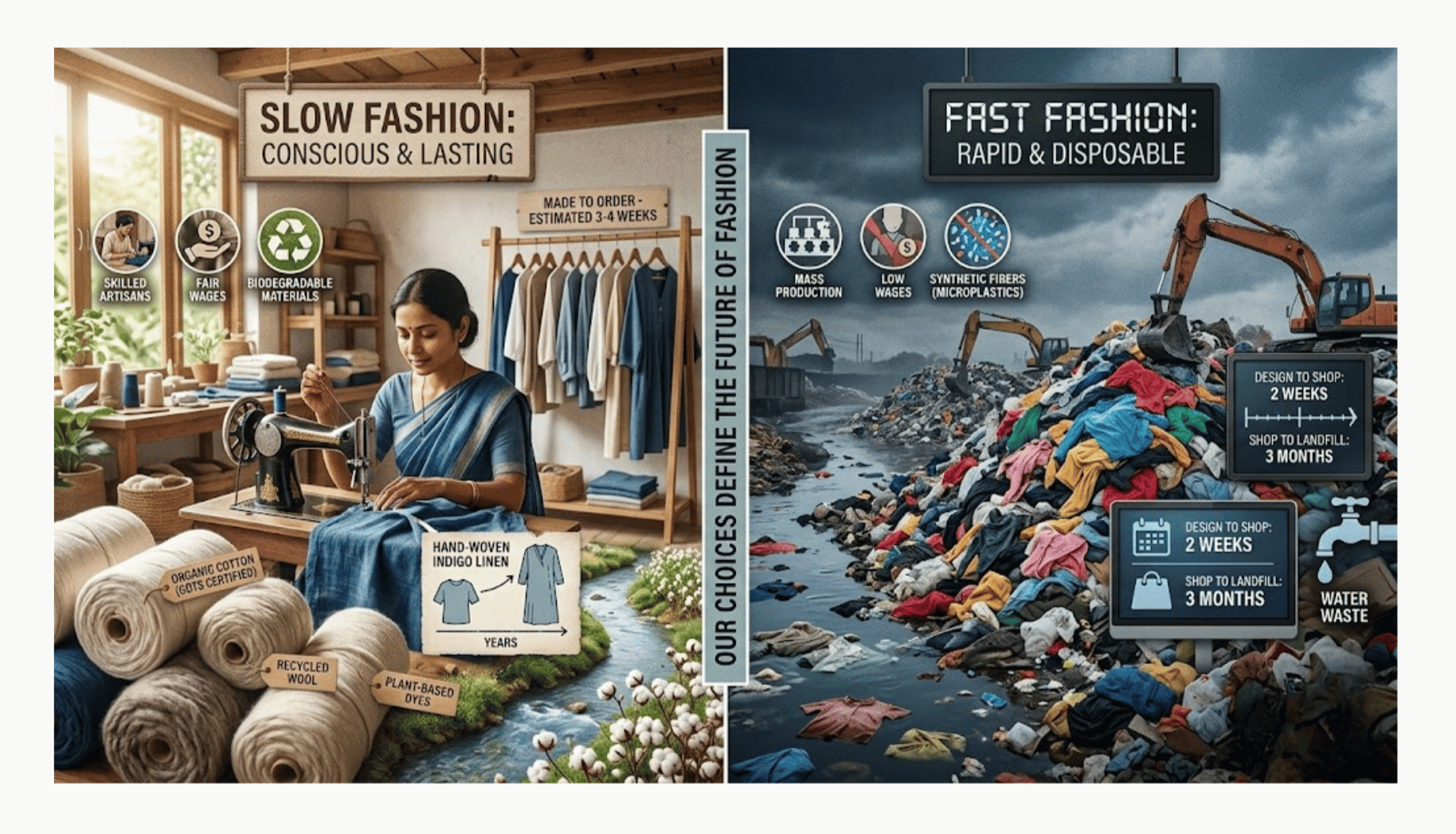
Tag: teeevo

  • Slow fashion vs. fast fashion: which one actually costs less?

    Slow fashion vs. fast fashion: which one actually costs less?

    Saturday or Sunday, that is when we decide to go out and shop. Sarojini Nagar is packed every single day. Not just weekends. Like, there’s a permanent sale that never ends. Clothes, home decor, accessories, everything is available at prices already low enough to make you stop and look. And if the price still feels like too much, we bargain it down further.

    We walk away feeling like we won something. A small sense of victory, a quiet pride in having paid the least possible.

    But is it really a victory?
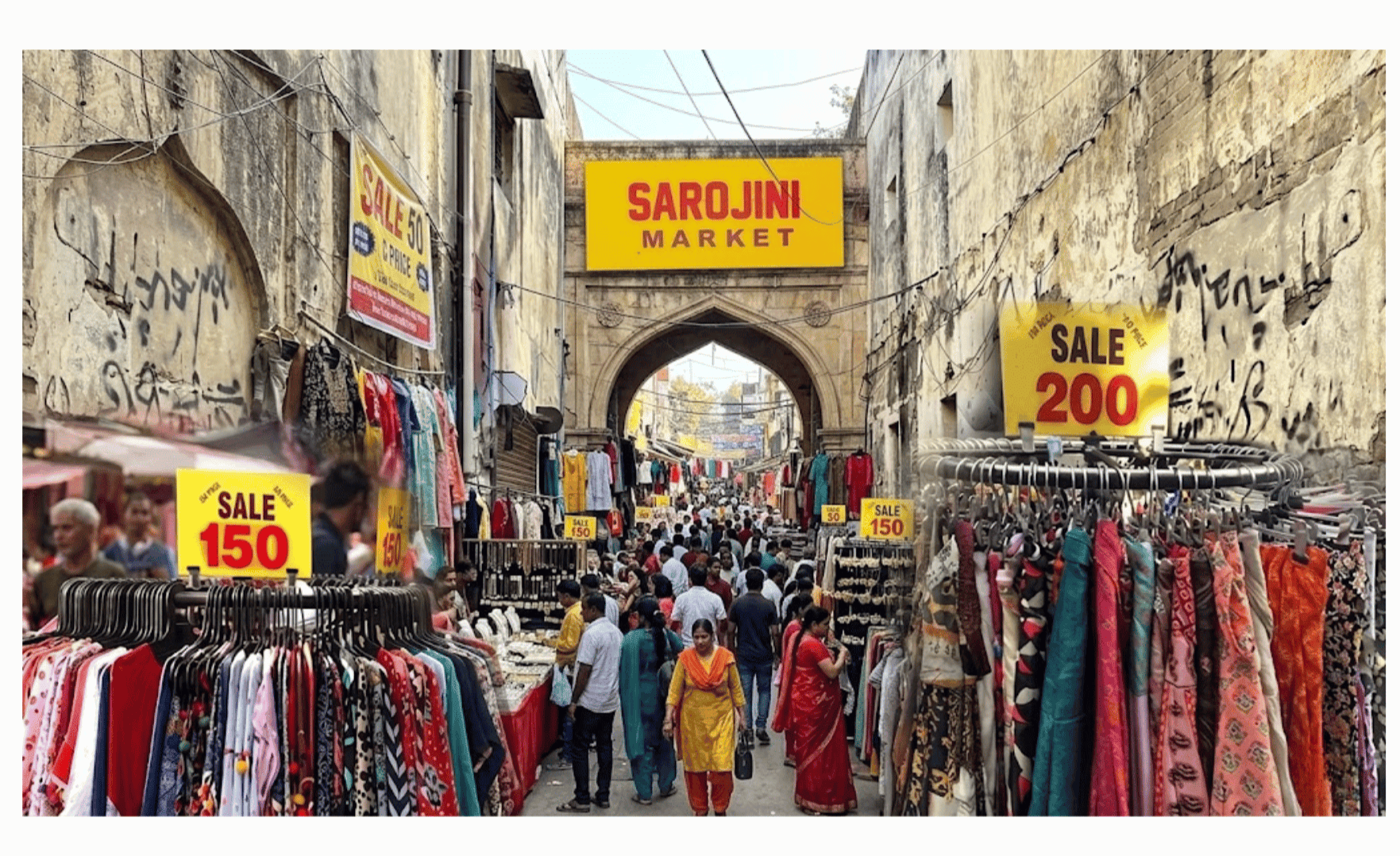
    sarojini nagar fast fashion dump yard

    There is an old saying that says when something costs almost nothing, somebody somewhere is quietly paying the rest of the price.

    In India, we are taught to be the masters of the bargain. We pride ourselves on getting the lowest price. However, our obsession with “cheap” is creating a “race to the bottom” that is destroying our environment, our labor force, and, surprisingly, our own bank accounts.

    1. The Math of “Cost-Per-Wear”: Why ₹1500 is Cheaper than ₹400

    Take two plain cotton t-shirts.

    One costs ₹400, the other ₹1,500.
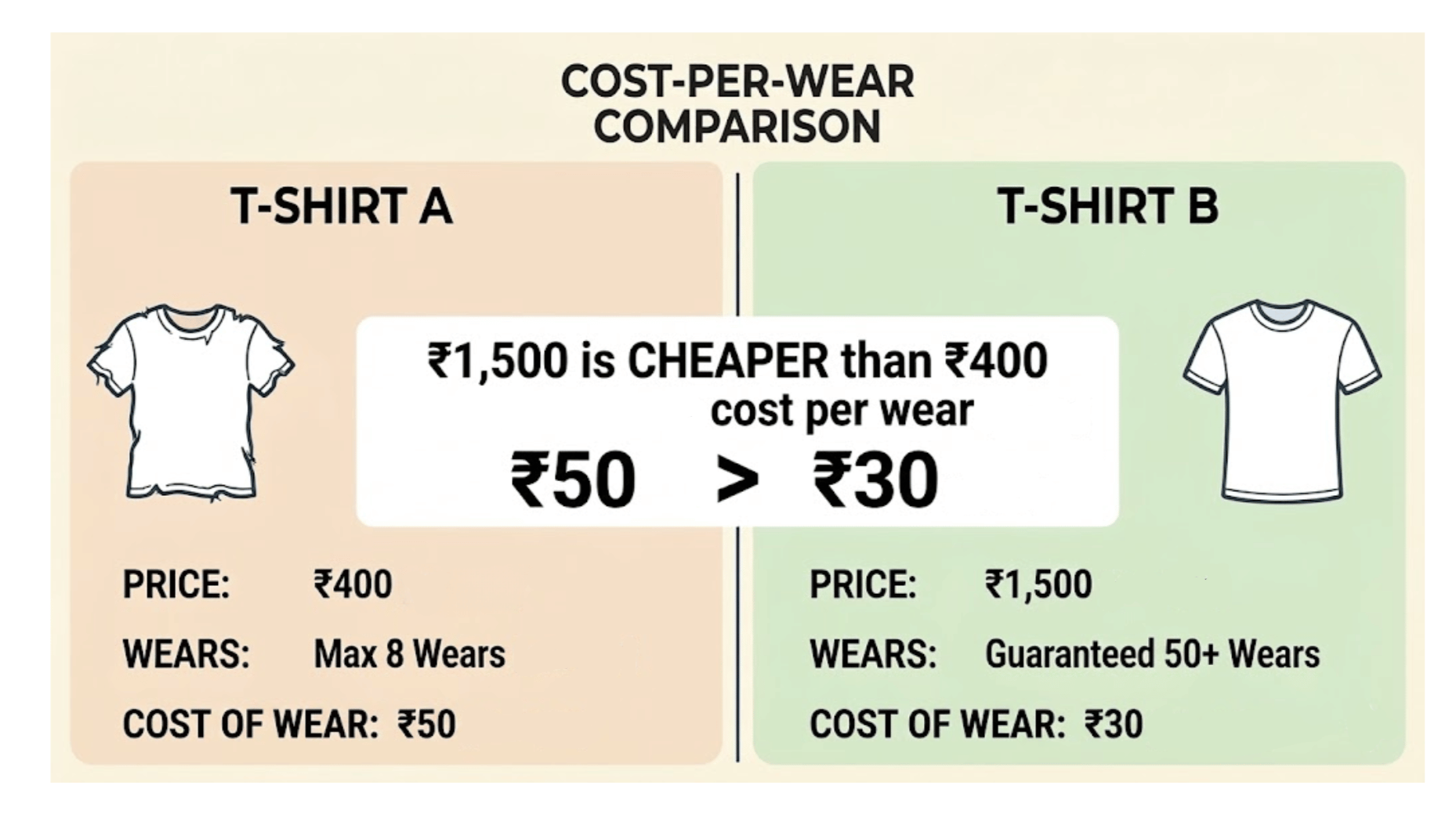
    Cost per wear analysis of fast fashion tshirt vs sustainable tshirt

    According to the Ellen MacArthur Foundation, the average person now wears a piece of clothing only 7 to 10 times before tossing it.

    The cheaper one shrinks after a few washes, the seams loosen, and the color goes dull. You get maybe 8 wears out of it, ₹50 per wear.

    The pricier one, made with better cotton and actual stitching, lasts through 50 wears easily, at ₹30 per wear.

    Over time, the “expensive” sustainable shirt is actually 40% cheaper than the fast fashion one. When we buy clothes, we’re not saving money; we’re just buying more and more.

    2. The Sarojini Effect: Psychology of the “Dump.”

    India has become a dumping ground for global fast-fashion surplus. Markets like Sarojini Nagar are no longer just about local thrift; they are visual evidence of overproduction. Because prices are so low, our psychology shifts.

    We stop buying based on need and start buying based on impulse. Brands use “exploitative trends”, releasing new “drops” every week to make you feel that what you bought last month is already obsolete. The word “Fast” doesn’t just refer to the speed of the sewing machine; it refers to how quickly a brand wants that garment to throw them away.

    3. The Hidden Human Cost: Would You Work for ₹300?

    We live in an India that dreams of progress.

    We want five-day work weeks, hybrid offices, health insurance, PF contributions, and 30 days of paid leave. These are fair things to want. While we fight for “work-life balance,” someone worked 15 hours for ₹300 in the textile industry

    Without weekends, without insurance, without much of a safety net. Sometimes entire families get pulled into the work just to keep pace with demand. Not because their time is worth less, but because the system we keep feeding with our purchases has decided it is.
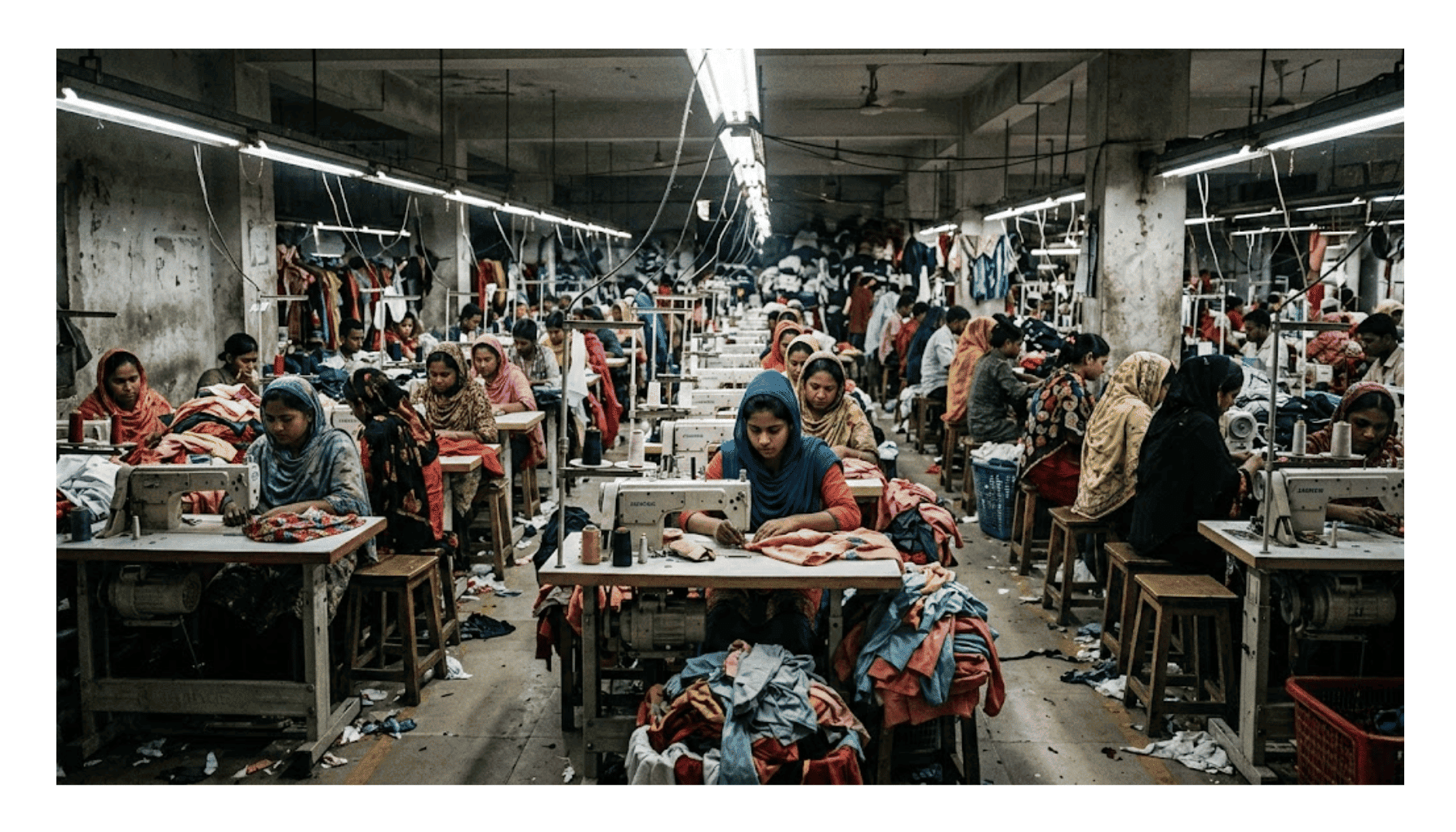
    unfair working condition of people working in textile industry

    Unequal wages aren’t some distant issue tied to factories we’ll never see. They’re much closer than that. Just look around.

    The dhobi who brings back your clothes neatly pressed. The cobbler outside the market has spent years repairing shoes. The tailor who fixes, alters, and makes things fit just right. The bai who quietly keeps your home running so your day can run smoothly.

    These are people whose work we rely on almost every day. Yet their wages are often the first thing we bargain over.

    This isn’t about guilt. It’s about awareness. The same things we want in our own jobs, fair pay, dignity, and respect for our work, belong to them too.

    You realize this the moment you step outside India. Abroad, a simple alteration is a luxury. A handmade piece costs a small fortune. A cobbler, if you can find one, charges what the skill is actually worth. And you stand there thinking, we have all of this back home. In every lane, in every market, in every small town. We are genuinely blessed with talent that most of the world would pay handsomely for.

    So the least we can do is pay fairly. Not out of guilt, but out of gratitude. Because these hands are keeping something alive that deserves to survive. And if we keep asking them to do it for less and less, one day we will look around and find that the skill, and the person behind it, has quietly disappeared.

    Nothing on that receipt will tell you any of this. But now you know.

    What cheap fabric is actually made of

    To keep prices low, fast fashion cuts corners on material, on dye, on stitching.

    Synthetic blends that trap heat in an Indian summer.

    Seam that give out after a handful of washes.

    Dyes (often toxic) that workers handle daily, breathing in what eventually shows up as chronic illness.
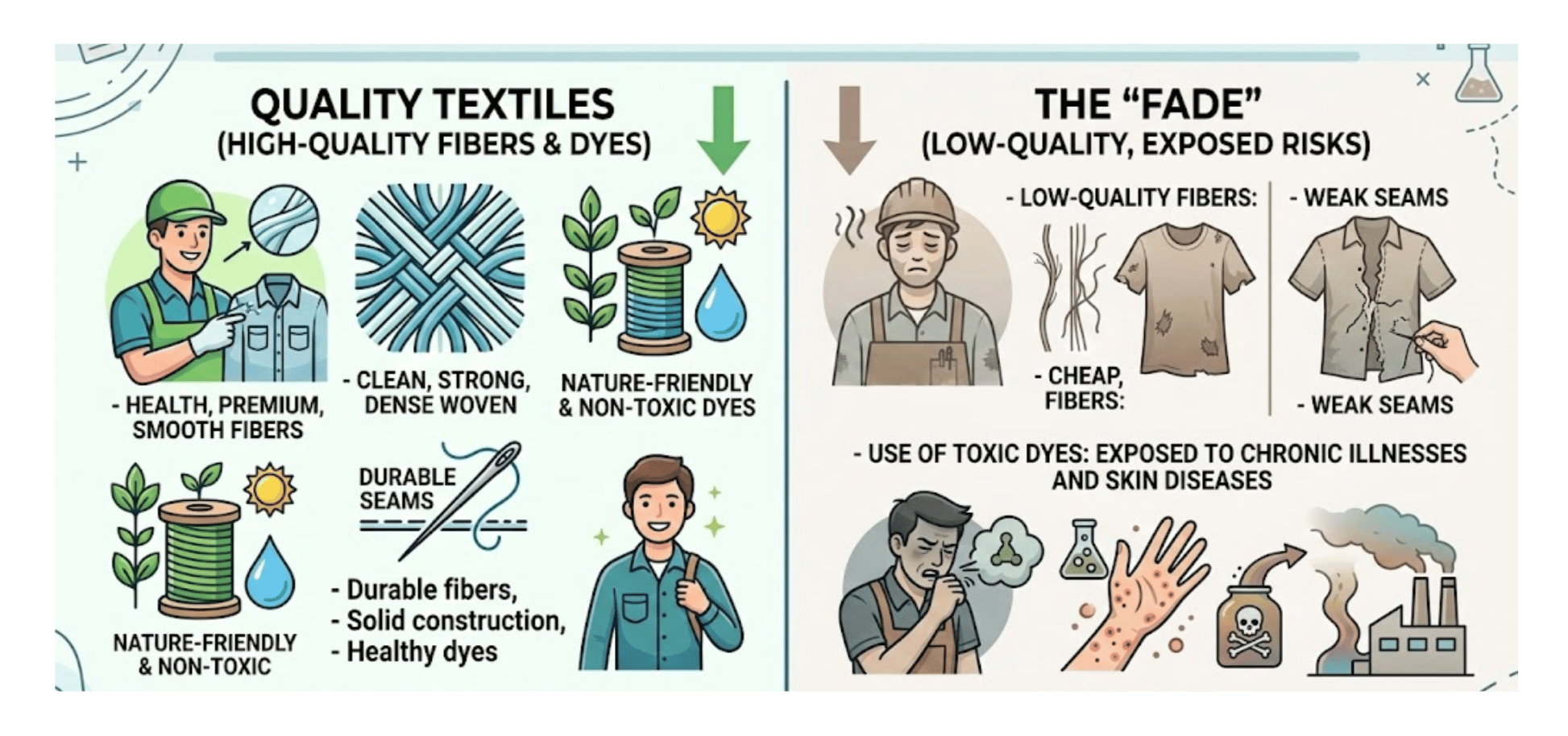
    Quality of fast fashion vs slow fashion textile

    When you pay more for a slow fashion piece, some of that money goes to the farmer who grew organic cotton, the person who used safer dyes, and the tailor who took time on the stitching because the garment was meant to last.

    And every time a cheap synthetic shirt gets washed, thousands of microfibers enter the water. Rivers, groundwater, eventually the sea. It adds up quietly, the way most permanent damage does.

    If you want to go deeper into how far the damage travels, from the cotton farm to your wardrobe, I have covered the full impact of the cloth value chain in a previous article. Worth a read.

    What the price tag isn’t telling you

    Real value was never just the number at the billing counter. It is how long something serves you, and what it took from the world to get made. The next time something is priced at ₹299, the honest question to sit with is who paid the rest?

    Buy less. Buy better. Local. And pay the full price, not just the one that shows up on the tag.

  • Turn your designs into income with TeeEvo.

    Your Art, Your Empire: The Ultimate Guide to Print-on-Demand with TeeEvo

    You may already have designs saved on your computer, sketches in a notebook, or an Instagram page where people comment, “I’d buy this on a shirt.”
    If you’ve ever thought about turning your creative ideas into real products, this guide shows you exactly how.

    With print-on-demand, creators can sell custom products online without inventory, upfront costs, or risk, and TeeEvo is built to make that process simple, transparent, and creator-first.

    Why Print-on-Demand Is Growing Fast

    The creator economy and demand for personalized products continue to rise. Consumers want meaningful, custom items, and creators want business models that don’t require heavy investment.

    • The global print-on-demand market was valued at nearly USD 10 billion in 2024
    • Growth is driven by e-commerce, personalization, and sustainable production
    • Small brands and independent creators are leading this shift

    Print-on-demand fits perfectly into how people shop today.

    exponential growth of pod business

    Where TeeEvo Fits In

    TeeEvo is more than a print-on-demand service. It acts as your production partner, fulfilment team, and digital storefront, all in one platform.

    TeeEvo is built for:

    • Independent creators and artists
    • Designers building clothing brands
    • Local print shops moving online

    Everything is designed to help you turn creative ideas into sellable products without technical friction.

    How to start selling on TeeEvo (Step-by-Step)

    Step 1: Choose a profitable Print-on-Demand niche

    Successful POD brands don’t design for everyone. They design for specific, passionate audiences.

    High-demand niches include:

    • Anime and pop culture designs
    • Artistic and expressive illustrations
    • Music, band, and lyric-based graphics
    • Automotive culture (cars, bikes, motorsports)
    • Clean typography and quote-based apparel
    sustainable pod india
Oversized black organic cotton t-shirt with a minimalist white typography design on a male model. High-quality sustainable streetwear India.

    Ask yourself:

    • What niche am I already part of?
    • What designs are popular but poorly executed?
    • What would I actually buy?

    Finding this overlap gives you a competitive edge.

    Step 2: Design With Real-Time Pricing Transparency

    One of the biggest challenges in print-on-demand is unexpected production costs.

    TeeEvo solves this with real-time pricing visibility:

    • Larger print areas = higher cost
    • Smaller, minimalist designs = lower cost
    • You see your margins while designing, not after

    This helps you design smarter and price confidently.

    oversized-streetwear-tshirt-design-india

premium-organic-cotton-tshirt-lifestyle-shot

custom-printed-black-tee-male-model-street-style

unisex-graphic-tshirt-sustainable-fashion-brand

high-quality-dtg-print-on-white-cotton-tee
ai-tshirt-design-tool-interface-dashboard

text-to-design-ai-generator-for-apparel

custom-tshirt-creator-online-no-design-skills

real-time-pricing-calculator-for-custom-clothing

digital-mockup-generator-for-streetwear-creators

    A Safer Way to Start

    Lower Risk for Beginners

    You can start with smaller designs, order low-cost samples, and test quality before scaling—making TeeEvo ideal for first-time POD sellers.

    Step 3: Create Your Online Store

    Setting up a TeeEvo store is simple, beginner-friendly, and completely free.

    You can:

    • Create a free storefront
    • Upload designs
    • Choose fabrics and branding options
    • Preview realistic product mockups

    You control pricing, branding, and presentation, without hidden fees.

    Step 4: Upload, Price, and Finalize Products

    Before launch:

    • Review how designs look on different products
    • Set pricing based on quality and target audience
    • Decide whether to offer introductory discounts

    These decisions shape how customers perceive your brand and value.

    Step 5: Launch and Promote Your Products

    Promotion connects your designs to buyers.

    Print on demand India, Start a clothing brand India, Custom t-shirt printing online, Sustainable streetwear India
Dropshipping apparel India, No inventory business ideas, Direct to garment printing service, Passive income for artists
Create a free online store, Best POD platform for creators, Design your own t-shirt

    Best platforms for print-on-demand marketing:

    • Instagram and Instagram shops
    • Facebook business pages
    • WhatsApp communities
    • Telegram channels

    And as you grow, you won’t have to promote alone.

    With TeeEvo Business, we will offer structured growth support for scaling brands, including bulk campaign support, branded merchandise solutions, advanced performance insights, and priority fulfilment for high-volume sellers.

    So whether you’re testing your first design or launching a full merchandise line, the infrastructure grows with you.

    Focus on storytelling. Share what inspired the design, who it’s for, and why it matters. Emotional connection drives conversions.

    Why Print-on-Demand Helps You Build a Smarter Business

    Print-on-demand (POD) works because it follows one simple rule: make products only after someone buys them.
    That single shift removes a lot of risk and waste, which is why POD continues to grow as a business model for creators and sellers.

    Start Selling Without Risk or Upfront Costs

    Print-on-demand lets you launch without guessing or overinvesting.

    • Sell without buying inventory first
    • Avoid bulk orders and storage costs
    • Test designs with real buyers
    • Grow only when orders come in

    This makes POD an easy entry point for designers, print shops, and first-time sellers who want to start small and stay flexible.

    Reduce Waste by Producing Only What Sells

    Overproduction is one of the biggest problems in fashion.

    Today:

    • Fashion creates 8–10%of global carbon emissions
    • Nearly 30% of clothing is never sold
    • Unsold items often end up dumped or destroyed
    • Nearly 20% of global wastewater comes from textile dyeing.
    Custom T-shirt Printing, Zero-waste Fashion, Side Hustle for Designers, No-inventory Business

    Print-on-demand prevents this by producing items only when they’re ordered. No excess stock. No leftovers. Less waste from the start.

    Meet Customer Demand for Responsible, Made-to-Order Products

    People care more about how products are made.

    • Around 70% of consumers prefer brands that act responsibly
    • Buyers increasingly avoid mass-produced, disposable products

    Print-on-demand gives customers something different. Their product isn’t made in bulk or stored for months. It’s created specifically for them, which builds trust and repeat business.

    A Note on Our Values: The Green Commitment

    We believe in providing a service that satisfies you and the environment.

    We want to be transparent with you: We are currently launching, and we are learning. To proudly call ourselves an environmentally conscious, sustainable POD brand is our ultimate goal. Are there hurdles? Yes. Are there gaps we need to fill? Absolutely.

    But we are super excited to bridge those gaps. By choosing TeeEvo, you aren’t just building a business; you’re joining a brand that is actively striving to do better for the planet, one print at a time.

    Why Choose TeeEvo?

    • Free print-on-demand store setup
    • Transparent, real-time pricing tools
    • High-quality printing and materials
    • Support for creators, designers, and print shops
    • A growing sustainability vision

    Ready to Start?

    If you’re still reading, curiosity has already done its job.

    The difference between creators who earn and creators who only imagine isn’t talent.
    It’s action.

    Design something.
    Upload it.
    Launch your store.
    Share it with ten people.

    Your first goal isn’t perfection.
    It’s momentum.