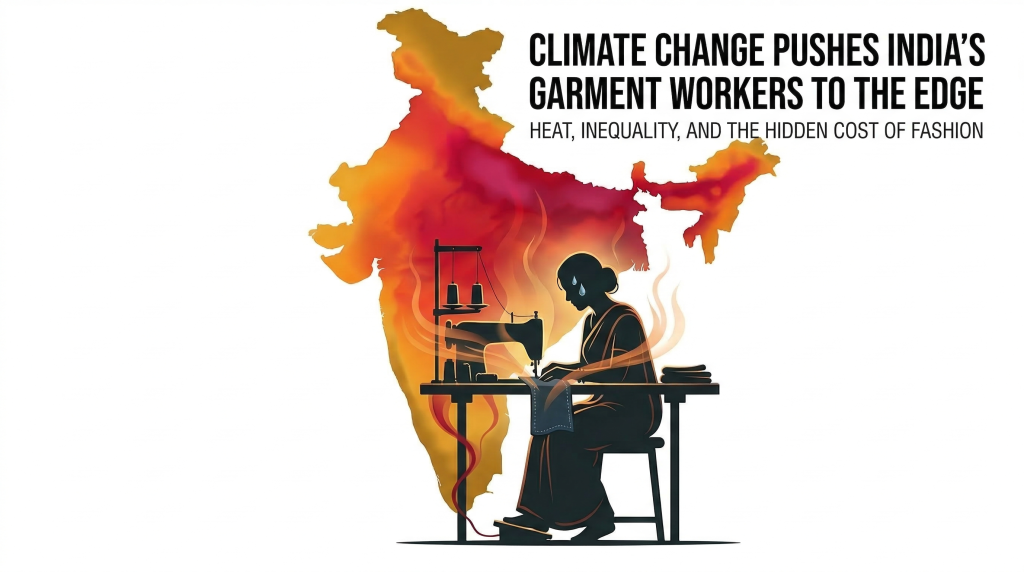
While some people stay cool inside buildings with cooling systems, vast numbers of garment makers suffer in workplace conditions above 50 degrees Celsius.
As per data shared by the International Labour Organization (ILO), around 2.4 billion employees worldwide encounter job risks tied to shifting weather patterns.
In India, 45 million individuals working in apparel production – seven out of ten being female – are especially at risk. A study titled “Breaking Point: Garment Workers and Heat” shows rising temperatures do more than affect nature; they challenge fairness at work, physical safety, and basic respect for people.
Trapped in Heat Chambers
During 2024, readings near 52°C appeared in Delhi; at the same time, areas such as Rajasthan and Haryana saw figures beyond 50°C. Inside textile production units located in cities including Surat, Tirupur, and parts of Delhi, heat levels rise further still.
Buildings made with cement or metal roofing hold extreme warmth – indoor values often match or exceed fifty degrees Celsius. Workers speak of confinement within these spaces, using words like “oven,” “microwave,” or “desert” to reflect what it is like inside. Their accounts reveal surroundings resembling sealed chambers under relentless sun exposure.
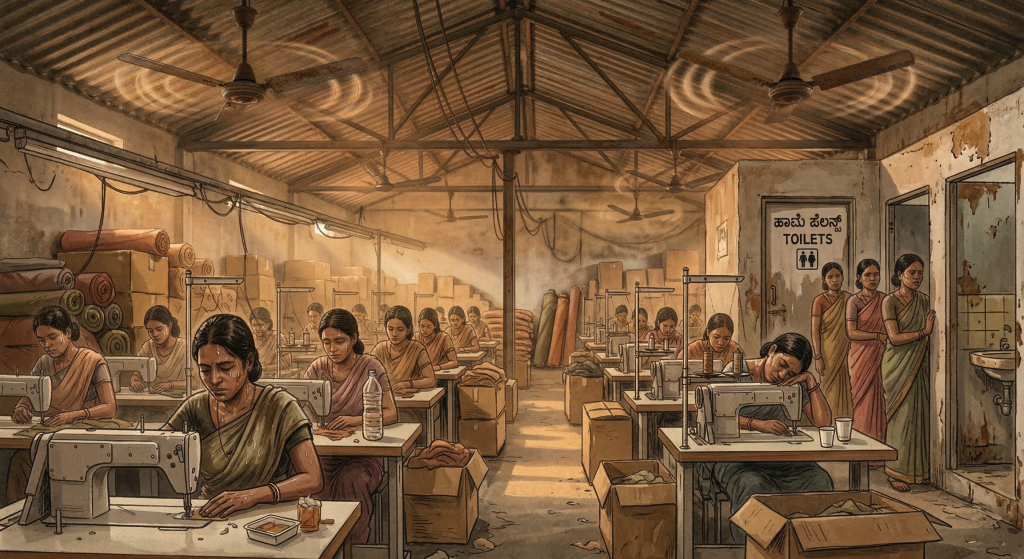
Systematic flaws define the failing infrastructure. On each floor, just two toilets serve every woman employed in numerous factories – frequently filthy, supplied by tainted water.
Instead of cooling, ceiling fans push already hot air around endlessly. When hydration or bathroom visits occur during work hours, penalties follow: pay cuts for those who pause, along with harsh words.
Cruelty hides within these routine deprivations. Between shifts, some lie on bathroom floor tiles, searching for relief. A surface cooled by shade draws them briefly.
One worker explained that a water bottle heats beyond drinking temperature after only ten minutes in sunlight. Still, people remain under such heat for eight hours at a stretch, day after day. The body adapts slowly, yet never fully.
The Vicious Cycle of Poverty and Heat Stress
Starting off, excessive heat leads to fluid loss, lightheadedness, and collapse; ongoing exposure harms body and mind alike. Just as severe: financial strain follows closely behind.
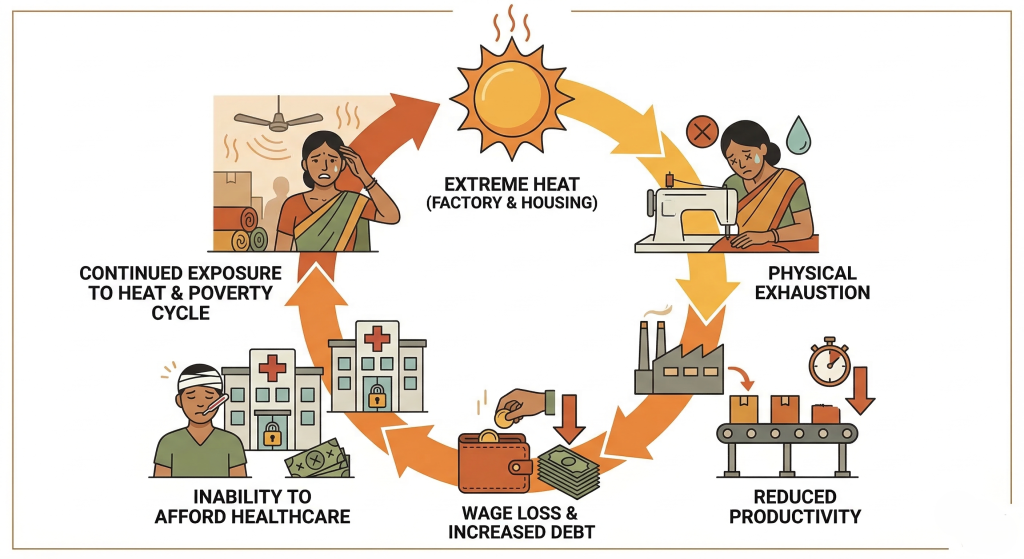
Earnings range from 10,000 rupees each month on steady jobs down to 150 rupees per day when hired temporarily. Medical consultation sets back a worker by 500, close to three days’ pay. Losing only 60 minutes of labor brings reduced income, despite the inability to purchase relief like cold drinks, safety gear, or treatment.
Despite meeting output demands, women endure heightened risks under extreme temperatures, their resilience stretched by labor inside factories alongside household duties outside.
As perspiration increases, fabric integrity declines – moisture marks appear, and materials absorb sweat. Glues meant to secure stones lose effectiveness, drying too slowly or not at all. When delays occur from such environmental factors, pay remains unchanged even if discipline follows. Compensation does not adjust despite causes beyond personal control.
The Stakes: 35 Billion Dollars and 35 Million Jobs
During fiscal year 2024, textile and clothing exports from India reached 35 billion dollars. Dependence on employee physical condition shapes every part of this financial result. By the year 2030, excessive heat may erase 35 million permanent positions.
As temperatures rise, workers produce less, and their health deteriorates. This hurts both people and profits. When the body reaches its limits, economic stability suffers too. Heat doesn’t just affect individual workers—it reshapes entire industries and livelihoods. Every spike in unsafe temperatures, coupled with insanitation and the unavailability of potable water, leads to falling productivity. The industry can only sustain what workers’ bodies can endure. Environmental pressures now shape financial outcomes more than ever before. When workers struggle, so does the economy that depends on them.
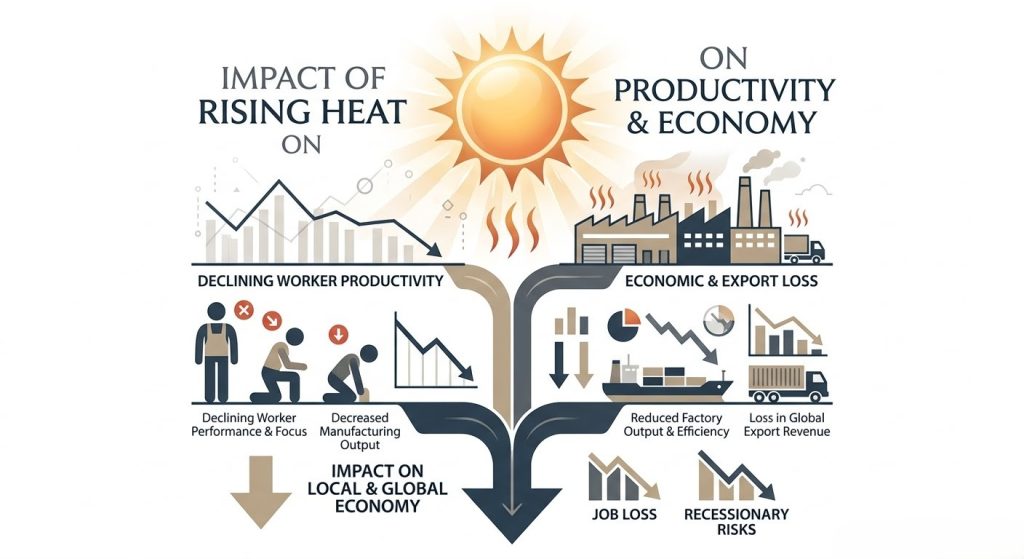
Every 1°C increase in global heat could slash the world’s total income by 12%. This would hurt the economy as much as a permanent war. Long-term earnings depend heavily on managing daily thermal stress levels. Productivity curves fall when safety margins disappear during work hours. Well-being cannot be separated from national revenue streams anymore.
Without adaptation, losses accumulate across sectors relying on manual effort. The data reveals one truth repeatedly: temperature governs output. What happens to workers inevitably shapes what happens to markets.
Urgent Action Required
Action is needed on multiple fronts at once.
- Workplace infrastructure: Cooling systems must be installed in factories, hygiene facilities upgraded, and reliable water supplies ensured.
- Protective rules: Clear procedures should govern high-temperature periods, including scheduled breaks during extreme heat and financial support if illness results from exposure.
- Fair pay: Wages should reflect the costs of adapting to shifting weather, with safeguards that remain in place even when work halts due to dangerous temperatures.
- Global responsibility: Suppliers must meet basic labor standards while preparing for the realities of climate change, as demanded by international companies.
Behind the $35 billion in exports are people whose worth cannot be measured in numbers. Their stability is earned through effort that often goes unnoticed. Safety at work should be unquestionable, yet for many it remains uncertain. Policies too often fail to respect their lives.
A fair future would never ask workers to sacrifice health for labor. As storms intensify and seasons grow unpredictable, delay itself becomes harmful. Investing now is less a choice than a necessity under rising skies. The cost of inaction may far exceed any budget saved today.