What are Natural Dyes?
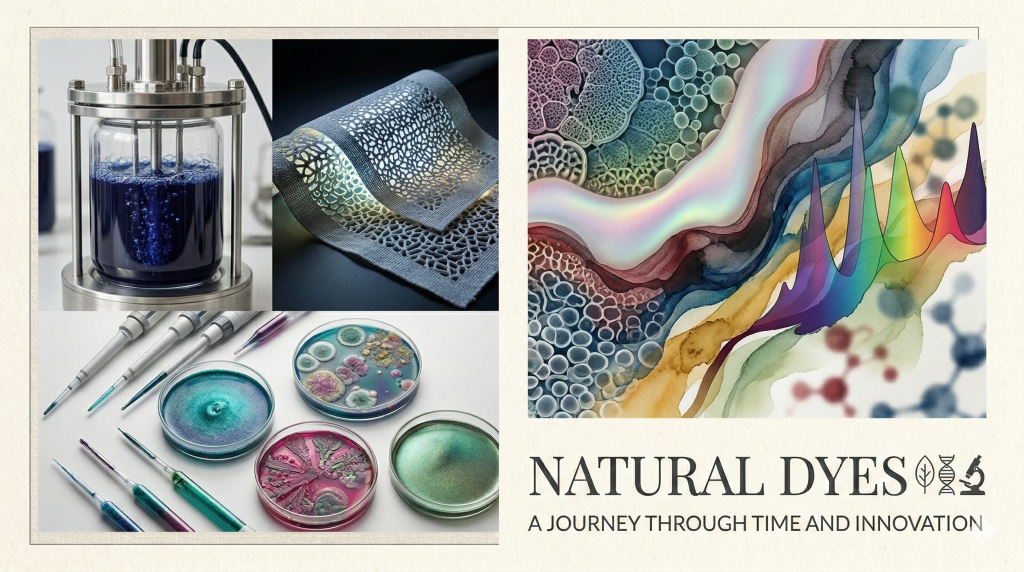
Natural dyes come from plants, animals, minerals, and microorganisms. They’re used to add color to textiles, food, and other materials. Unlike synthetic dyes made in labs, these come straight from nature.
Such as –
From Plants:
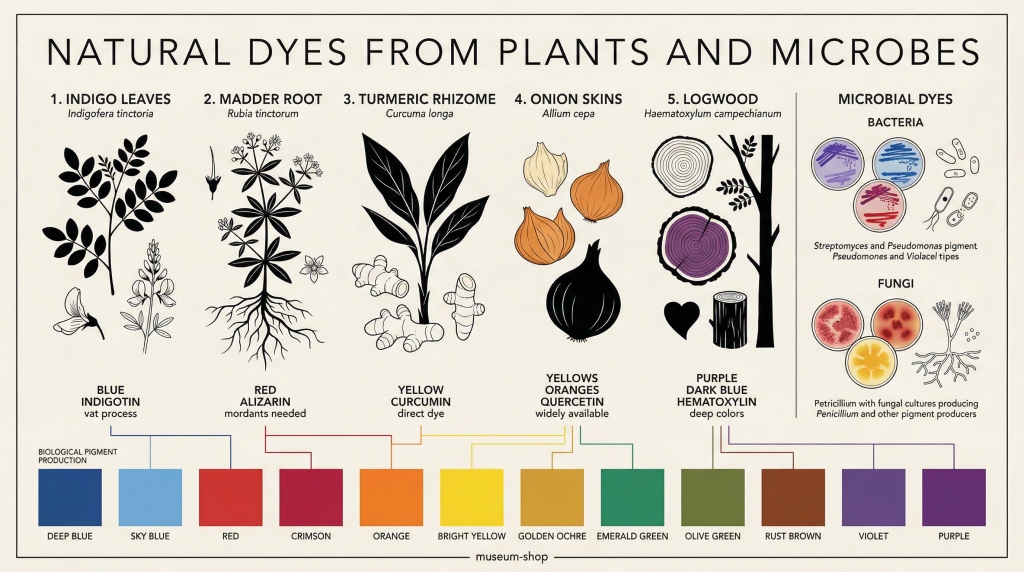
Indigo: Deep blues from Indigofera tinctoria
Madder Root: Vibrant reds and oranges
Turmeric: Bright yellows
Henna: Reddish-browns
Onion Skins: Yellows and browns
Pomegranate Peels: Yellows and tans
From Animals:
Cochineal gives brilliant crimsons from scale insects
Tyrian purple, a royal dye drawn from sea snails, required twelve thousand creatures to yield just 1.4 grams of pigment – such was the cost of color in antiquity
From Microorganisms (Modern):
Bacteria (Streptomyces): Reds, purples, yellows
Fungi: Blacks and browns
A Glimpse Into History
For thousands of years, people have used natural dyes. In Georgia, excavations revealed colored fabrics from 30,000 BCE; similar finds appeared later in Israel by 10,000 BCE. From Mohenjo-daro in old India came cotton cloth stained with mud. This evidence points to skilled techniques around 3,000 BCE. 4,000 years ago, such practices already showed depth and precision
In ancient Egypt, people used colors to show spiritual beliefs. Yellow is the color of the gods. Green is for when life begins again. India has cultural identifier techniques like Bandhani, where workers tie and dye fabric. Another is Kalamkari, where artists paint on cloth by hand.
The Silk Road facilitated the trade of materials. As individuals traveled, they shared technical knowledge, creating economic networks.
Across centuries, colouring cloth relied exclusively on plant-based sources. Rooted in tradition, these pigments shaped beliefs in communities far apart. Their creation influenced trade routes spanning continents. Spiritual practices often mirrored the hues available locally. Economies rose where dye-producing plants grew abundantly. Long before synthetic versions appeared, nature dictated every shade worn
The Great Replacement: Why Natural Dyes Faded
The 1856 Breakthrough
It was a turning point when William Henry Perkin discovered “mauveine” during attempts to synthesize a malaria treatment. From that moment onward, artificial colorants became possible due to his unintended discovery.
Well into the 20th century, factory-made colours derived from coal tar and oil began overtaking plant-based alternatives across manufacturing sectors due to their efficiency. Though traditional sources once dominated textile tinting, these new chemical compounds offered greater consistency under mass production demands. Their rise followed advancements in organic chemistry during prior decades, which unlocked repeatable processes for vibrant shades.
Availability of raw materials from industrial waste streams further encouraged adoption by dye producers. Over time, economic incentives aligned with technological progress pushed natural options to niche applications.
Into the 1920s, natural dyes lingered mainly within modest artisan circles rather than widespread industry. Cultural efforts kept traces alive where commercial practice had faded. Though largely replaced, these pigments endured quietly through tradition instead of mass production. Their presence narrowed sharply, yet persisted in pockets tied more to heritage than utility
The Hidden Disaster: What Went Wrong
100 years passed before artificial colors faced scrutiny. During the 1970s, troubling effects began emerging unexpectedly. Progress once assumed revealed complications over time
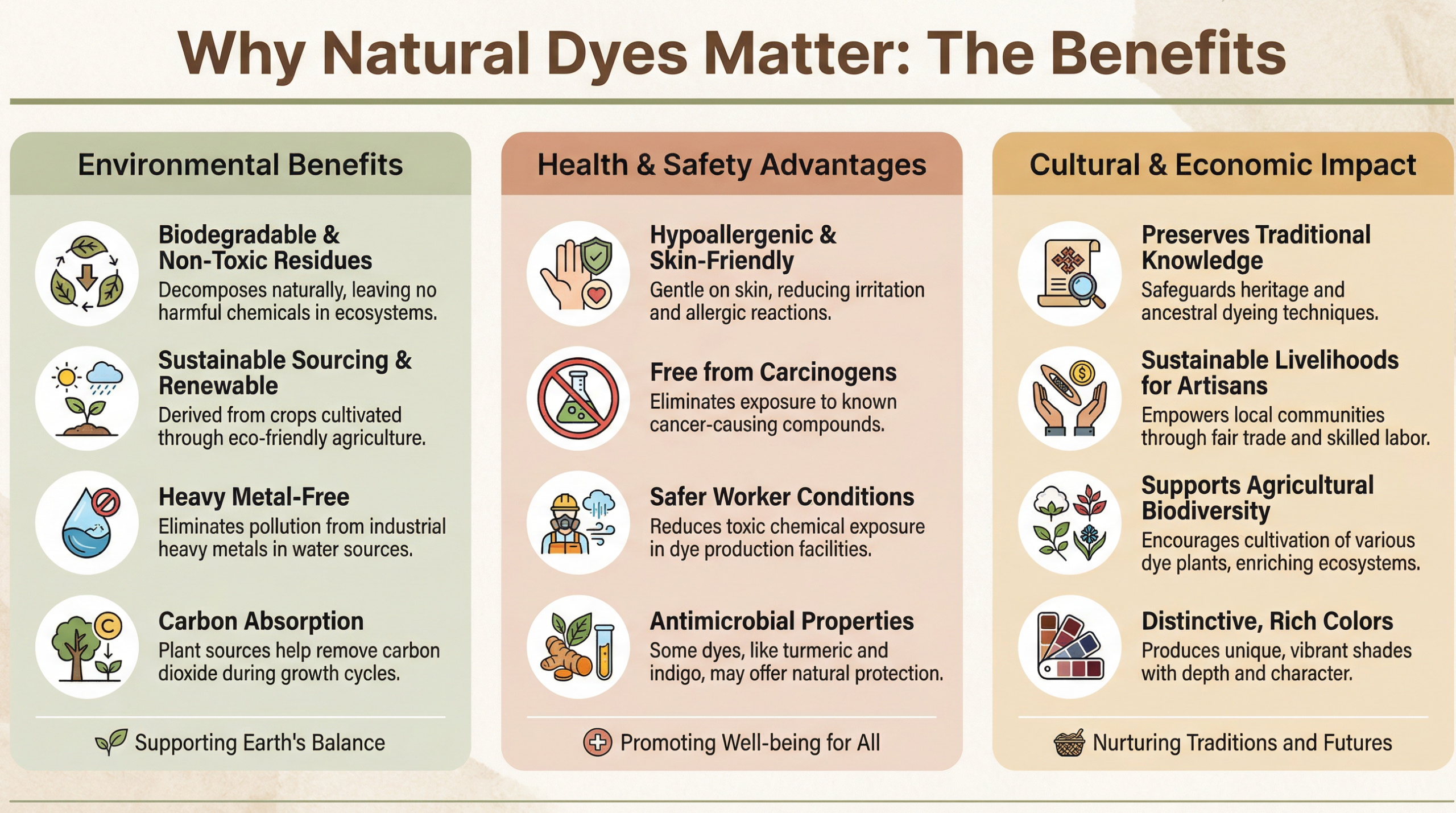
Environmental Damage
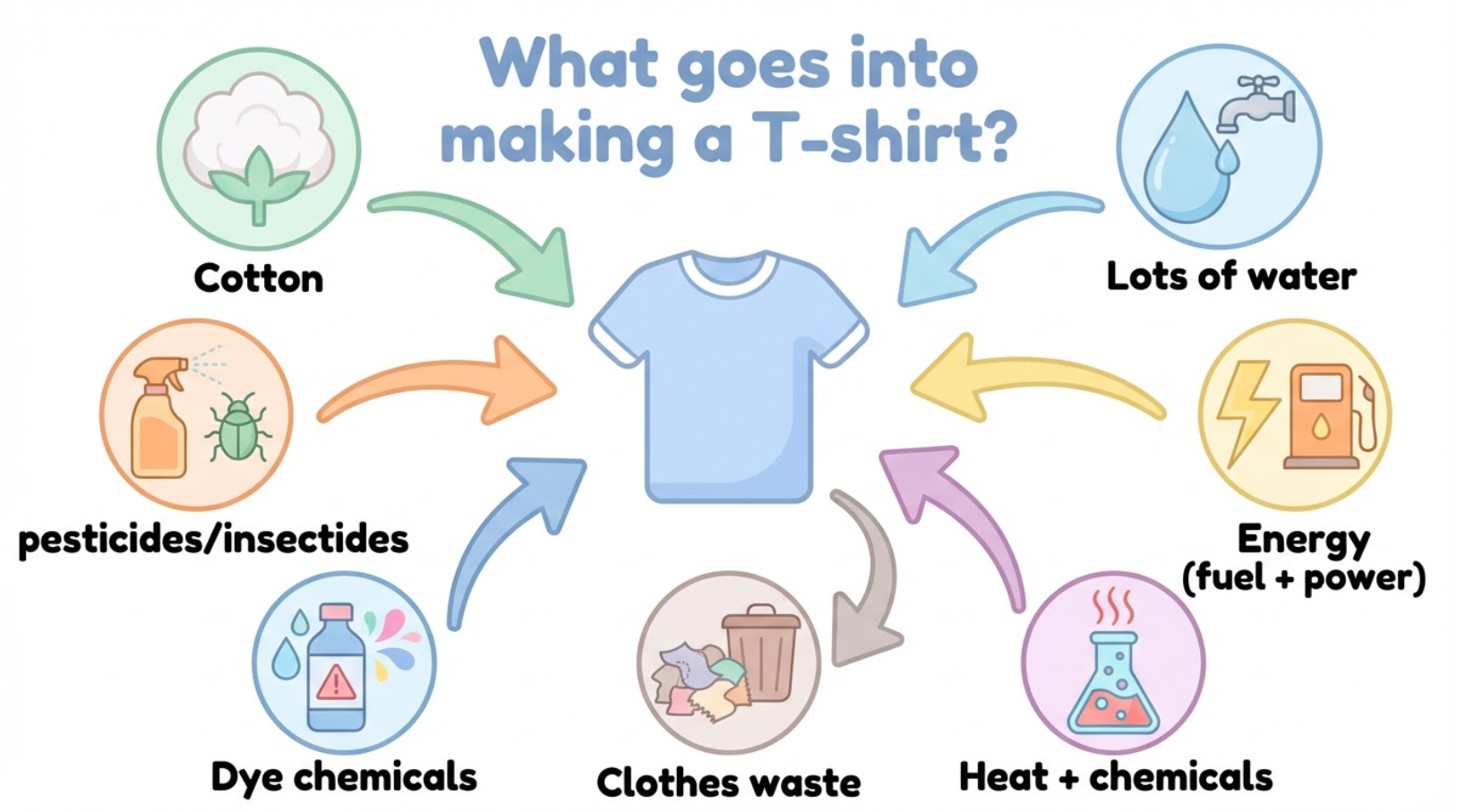
- 1/5th of industrial water contamination worldwide comes from coloring fabrics
- Some rivers and groundwater become polluted because standard cleaning facilities fail to filter out certain heavy metals. Chromium slips through these systems along with copper, each slipping past typical barriers. Lead moves freely where treatment ends too soon. Mercury joins them despite efforts meant to stop such contaminants. These substances persist even after processing steps finish their work
- Each ton of fabric demands 200 tons of water – an overwhelming majority ends up polluted
- Non-biodegradable chemicals persist for decades in ecosystems
- Dead zones in water bodies from chemical oxygen depletion
Health Issues
- Factory workers faced cancer and respiratory problems from carcinogens
- Consumers, especially children, had skin allergies and dermatitis
- Chemical residues caused hormone disruptions
Water and air pollution from dye facilities affected nearby residents’ well-being. Health issues arose in populations living close to textile processing sites. Exposure to contaminated emissions impacted village areas adjacent to coloring factories. People in proximity to pigment production reported medical complications over time. Industrial runoff into streams harmed community health near manufacturing zones
Lost Knowledge
Long-held knowledge of natural dye methods weakened when manufactured colors became common. Over time, handcrafted coloring practices lost ground to chemical alternatives
The Revival Where Science Meets Tradition
From the 1970s onward, attention turned toward natural dyes when environmental concerns became more visible. Yet these initial efforts faced obstacles – processes proved lengthy, expensive, and unpredictable when applied today
Progress emerged during the 2000s through a blend of biotechnology and traditional practices. Not a retreat into past ways, rather an advance shaped by balance with natural systems
Key Scientific Advances
Scientific methods are changing.
1. Microbial Dye Production –
Experts modify bacteria so that those organisms create color.
By using large tanks, researchers collect pigments throughout the entire year.
There is a high level of uniformity in the colors because the process occurs indoors.
2. Enzymatic Processing –
Workers use enzymes to pull dye out of plant materials.
To improve efficiency, those proteins increase the amount of color by half.
As a result, the amount of discarded plant material decreases.
3. With nano encapsulation, small coatings that break down naturally protect the color.
It is common for the coatings to prevent fading when the sun shines on the material.
4. By using agricultural waste, companies create value from items that people usually throw away.
Onion skins are one example of a source for those high-quality dyes.
If workers use the leftovers, they lower the total amount of trash.
5. Low temperature Dyeing –
Due to new technology, the water remains at a temperature of forty degrees Celsius.
And this cooler water requires less electricity than water heated to ninety degrees.
6. AI Optimization -To find the best mixtures, engineers use machine learning.
There is a program that calculates how to make a specific shade of blue.
It ensures that the final color remains strong after many washes.
Real-World Example: Colorifix
Founded in 2015, a UK-based biotechnology firm called Colorifix uses engineered microbes to generate precise colors. These microorganisms apply pigment to textiles without relying on cultivated crops. No Chemicals.

Process:
- Find the gene for the desired color in nature
- Move the material into bacterial strains capable of rapid reproduction
- Bacteria make the pigment in bioreactors
- Bacteria apply the color straight onto the fabric
Benefits:
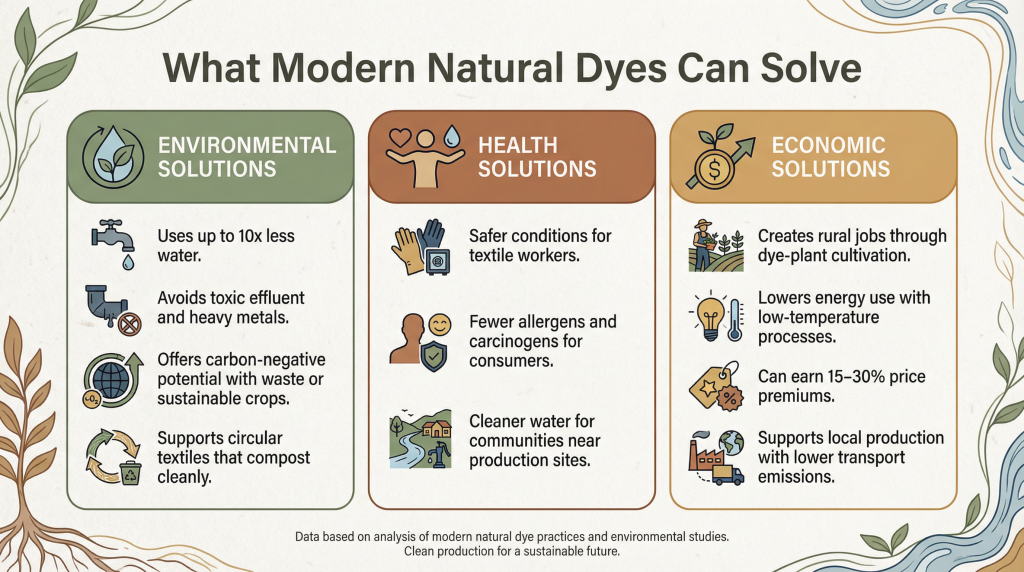
- Uses 10 times less water than traditional methods
- Chemicals of concern do not appear within the composition. Heavy elements are absent by design.
- Fully biodegradable dyes and processes
- Full color range possible
- Scaling becomes feasible toward industrial output without cost imbalance.
Working alongside major companies such as H&M, Pangaia, and ASICS has shown that plant-based colorants are viable in mass production. Though often seen as delicate, these pigments perform reliably when applied widely
What if making dyeing eco-friendly also made it better? Colorifix proves that change can improve both the planet and product. Problems like uneven results, high expense, slow output, limited shades, weak durability, or difficulty expanding – each has found solutions here. Instead of choosing between ethics and excellence, now there is another path
The Future Combines Nature and Science
Progress through natural dyes does not mean returning; instead, it reflects collaboration with nature toward advancement
Because of recent advancements, ancient practices now merge with current science to produce colorants through biological methods. These innovations allow long-standing techniques to work alongside laboratory processes for developing natural dyes.
With updated equipment, heritage-based approaches combine into contemporary systems using living organisms. Over time, age-old wisdom integrates within present-day frameworks focused on sustainable coloring solutions.
Modern instruments enable historical understanding to link directly to bio-driven production methods. Through such progress, past insights join future applications in generating eco-friendly pigments.